
How to Evaluate OPS PC Specs and CE Certification for Display Projects
How to Evaluate OPS PC Specs and CE Certification for Display Projects
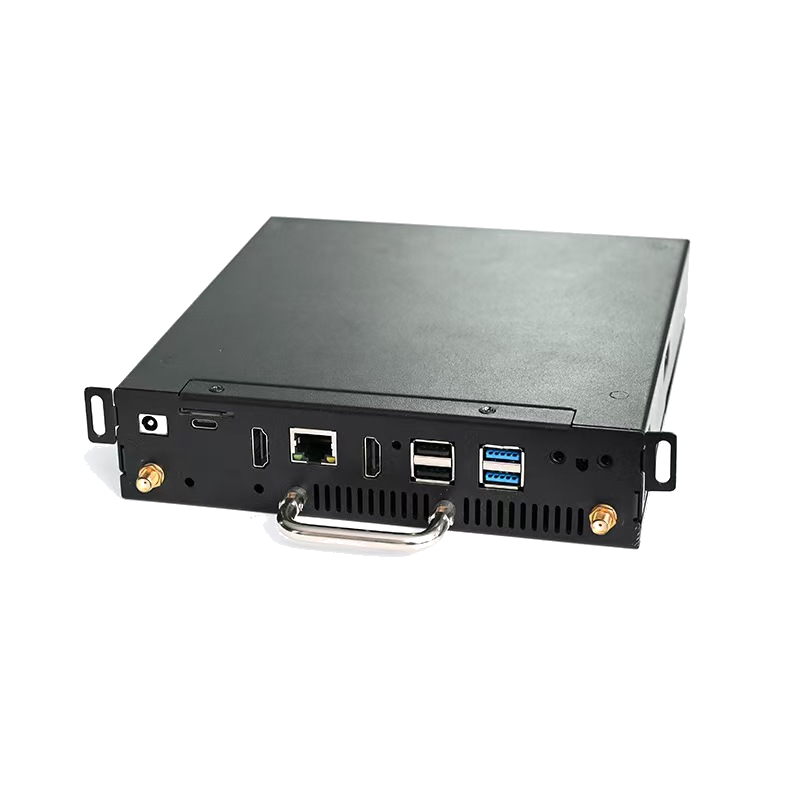
Choosing an OPS PC for an interactive display is rarely only about processor speed. For buyers and integrators, the real challenge is verifying that the module fits the display slot, meets EU compliance requirements, and has the right CPU, memory, I/O, and thermal design to run reliably in the field. This article explains what to check when evaluating OPS PC specifications and CE certification, using concrete examples from AIOSTAR's OPS and OPS-C product line.
Why OPS PC Specifications and Certifications Are Critical
One of the most common project failures is assuming that all OPS modules are interchangeable. The Intel OPS standard defines a standardized mechanical and electrical interface using an 80-pin JAE connector with a footprint of 180 mm x 119 mm x 30 mm. The OPS-C variant, widely adopted in the Chinese domestic market for educational interactive whiteboards, uses different dimensions—typically around 180.8 mm x 195.2 mm x 42.5 mm. A module that is not physically or electrically compatible with the display slot will not work, regardless of its processing power.
CE conformity is also a legal requirement for selling electronic products in the European Union. Buyers must be able to verify that the exact OPS PC model they intend to integrate is covered by the relevant certificates. Without this verification, a project can face customs issues, installation delays, or product non-compliance in the EU market.
OPS PC Market Context and Modular Standards
OPS (Open Pluggable Specification) was designed by Intel to standardize the media player inside a display. Today, OPS and OPS-C modules are used in interactive flat panels, interactive whiteboards, digital signage, conference displays, and large-format visualization systems. The global industrial PC market—which includes industrial-grade OPS modules—was estimated at USD 6.48 billion in 2024 and is projected to grow at a CAGR of 6.30% through 2032. The global interactive flat panel (IFP) market was valued at approximately USD 12.6 billion in 2024. Analysts also estimate that 15–25% of new interactive flat-panel display units ship with an integrated OPS-slot compute module.
These market figures explain why OPS PC selection is now a formal procurement step. As modular compute becomes a default option in display projects, checking standards, certifications, and project-specific parameters becomes a required part of the buying process.
What a Reliable OPS PC Must Deliver
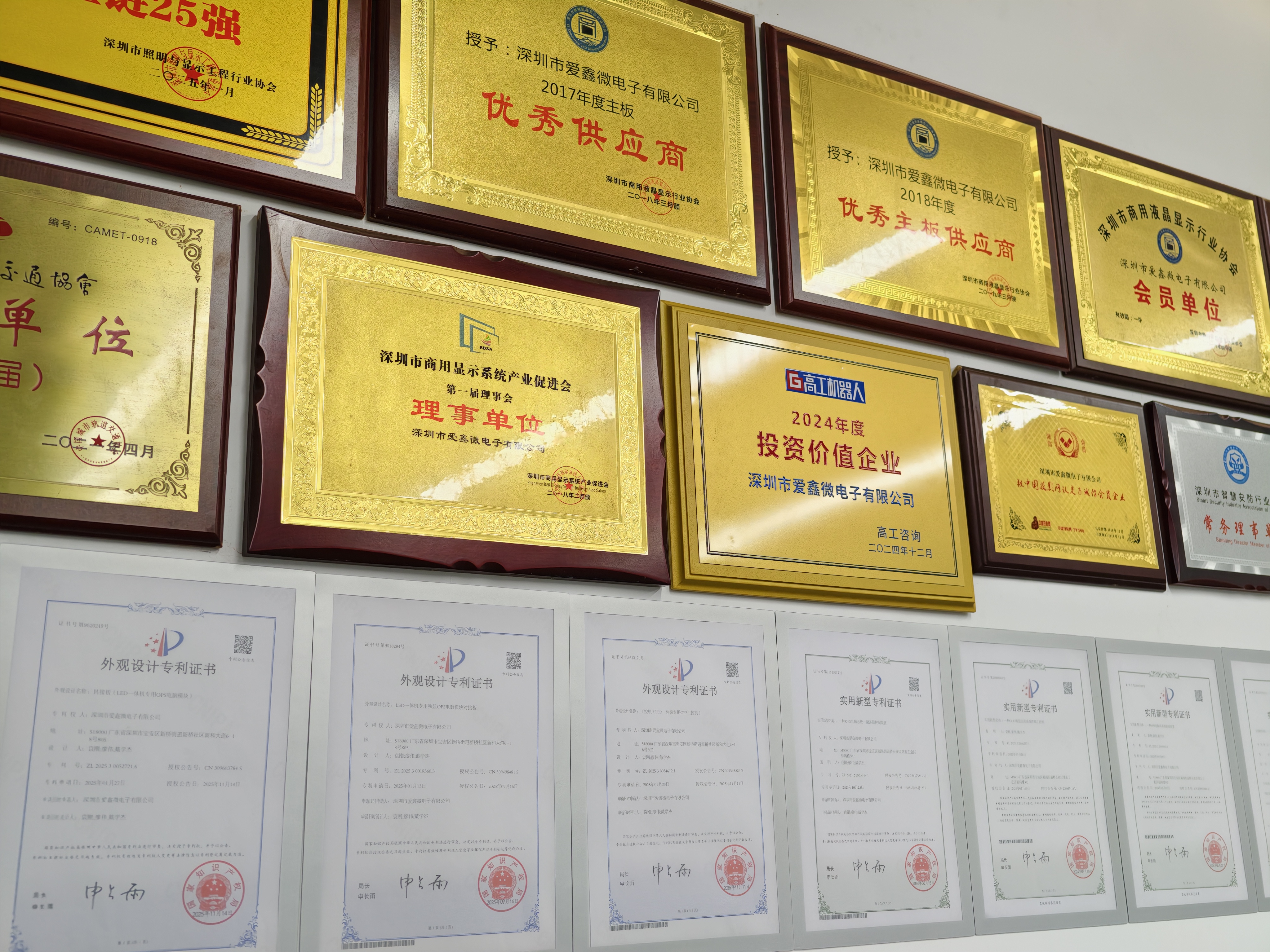
AIOSTAR (Shenzhen Aiostar Electronics Co., Ltd.) is a computer hardware supplier established in 2015 in Shenzhen, China. The company develops, produces, and supplies OPS PCs, OPS-C pluggable computer modules, Android OPS PCs, industrial motherboards, mini PCs, BOX PCs, industrial panel PCs, servers, and customized embedded computer systems. These products support interactive displays, digital signage, education, corporate meetings, industrial automation, smart transportation, retail, and security projects. AIOSTAR provides OEM and ODM services covering hardware configuration, I/O, chassis, cooling, BIOS, operating system image, logo, packaging, and accessories.
For EU-bound projects, AIOSTAR products are covered by third-party compliance certificates. For example, the OPS-C Pluggable Computer Module (model AOS-SOHAUF41SC) holds CE-RED certification number 25ITC1212094 under Radio Equipment Directive 2014/53/EU, and also complies with EU RoHS Directive 2011/65/EU and amendment 2015/863/EU. The Android AI OPS Computer (model AOS-SOR358464H) is also certified to CE-RED standards as per Directive 2014/53/EU and complies with EU RoHS requirements.
Key OPS PC Product Families
AIOSTAR's OPS and OPS-C lineup covers multiple platform options, giving integrators a clear path to match the compute module to the display project.
OPS-C Pluggable Computer Module (AOS-SOHAUF41SC) uses Intel Alder Lake-U processors, configurable SO-DIMM memory, and M.2 SSD storage. It supports OPS-C slot-in installation, Windows or Linux operating systems depending on configuration, and BIOS-level functions such as Wake-on-LAN, auto power-on, and watchdog. This module is suitable for interactive whiteboards, education technology, corporate meeting displays, and commercial display systems.
Android AI OPS Computer (AOS-SOR358464H) is an ARM-based module powered by the Rockchip RK3588 octa-core processor with an integrated 6 TOPS NPU for edge AI processing. It supports up to 8K multimedia capability depending on firmware and interface configuration, 4 GB LPDDR4 memory standard with up to 16 GB optional, and eMMC storage. Android 13, Ubuntu, or Debian options are available. The module is positioned for digital signage, smart retail, information kiosks, and edge-AI display terminals.
Discrete-GPU OPS Computer (AOS-SOH61I41SXG) is based on the Intel H610 LGA1700 platform and supports selected 12th and 13th Gen Intel Core i3, i5, and i7 processors. It provides HDMI, HDMI, and DisplayPort video outputs, with up to 8K 60 Hz output subject to the selected CPU, GPU, and display configuration. Optional discrete graphics are available by project. This module targets large-format commercial displays, LED meeting displays, video walls, visualization systems, and multi-display projects.
Domestic-Platform OPS-C Computer (AOS-SOZK6A341SXGE) supports Zhaoxin KX-U6780A, KX-U6740A, KX-U6640A, and KX-U6640MA processors. It includes six USB ports (two USB 3.0), optional GT730, GT1030, GTX 1050, or GTX 1050 Ti graphics depending on configuration, and OPS-C slot-in installation. It is designed for domestic-platform interactive displays, education, government information systems, and project-specific commercial displays.
Step-by-Step: How to Verify an OPS PC Before Integration
- Confirm the slot standard and physical dimensions. Determine whether your display uses the Intel OPS or OPS-C standard. Verify connector type, slot depth, and mounting holes against the module dimensions before ordering.
- Check power, thermal, and cooling compatibility. The display slot must provide sufficient power for the module. Confirm the thermal design margin, especially for 24/7 use in enclosed display environments.
- Verify CPU, memory, storage, OS, and video outputs. Match the module architecture to the target application. Interactive whiteboards usually need a responsive Windows or Linux platform; digital signage may favor Android with edge-AI capability; large-format video walls may need discrete graphics.
- Request compliance certificates. Ask for CE-RED and EU RoHS certificates that cover the exact model and configuration. Verify the certificate number, issuing body, scope, and market.
- Evaluate customization options. If the project needs specific I/O, BIOS features, operating system image, or branding, confirm the manufacturer can support OEM/ODM customization without disrupting the supply schedule.
- Validate with a sample. AIOSTAR accepts an evaluation sample MOQ of 1 unit. A sample lets you verify physical fit, performance, thermal behavior, and documentation before committing to volume production.
OPS PC Use Cases by Display Type
Education Technology: Interactive Whiteboards
In classrooms, an OPS-C module must fit the display's OPS-C slot, support touch software, media playback, and video conferencing, and operate reliably on a daily schedule. For these projects, mechanical size, connector pinout, display resolution, cooling, and OS image should be verified before mass production. The AIOSTAR OPS-C Pluggable Computer Module (AOS-SOHAUF41SC) is a common fit for this category.
Corporate Meeting and Collaboration
Meeting room displays need a stable computing platform for conferencing, document sharing, whiteboarding, and presentations. The Domestic-Platform OPS-C Computer (AOS-SOZK6A341SXGE) is designed for domestic-platform interactive displays, education, government information systems, and project-specific commercial displays. Its six USB ports and optional discrete graphics provide flexibility for peripherals and multi-screen use.
Digital Signage and Smart Retail
Digital signage projects often require scheduled or continuous media playback with remote content updates. The Android AI OPS Computer (AOS-SOR358464H) brings edge-AI capability to signage terminals, enabling content personalization and data processing near the display. It supports Android and Linux operating systems, making it suitable for information kiosks and smart retail.
Large-Format Visualization
For LED meeting displays, video walls, and visualization systems, high-resolution graphics and GPU-assisted workloads are often required. The Discrete-GPU OPS Computer (AOS-SOH61I41SXG) with optional discrete graphics supports up to 8K 60 Hz output and multiple video outputs, making it suitable for large-format commercial displays and multi-display projects.
AIOSTAR OPS PC Models Compared
| Model | Platform / CPU | Memory & Storage | Installation | Target Applications | Compliance |
|---|---|---|---|---|---|
| AOS-SOHAUF41SC | Intel Alder Lake-U (Core i5-1235U / i5-1240P) | Configurable SO-DIMM memory, M.2 SSD | OPS-C slot-in | Interactive whiteboards, education, corporate meeting displays | CE-RED cert. 25ITC1212094; EU RoHS |
| AOS-SOR358464H | Rockchip RK3588 octa-core up to 2.4 GHz, 6 TOPS NPU | 4 GB LPDDR4 (up to 16 GB), eMMC | OPS module | Digital signage, smart retail, information kiosks, edge-AI terminals | CE-RED; EU RoHS |
| AOS-SOH61I41SXG | Intel H610 LGA1700, 12th/13th Gen Core i3/i5/i7 | Configurable memory and storage | OPS slot-in | Large-format displays, LED meeting displays, video walls | Covered by AIOSTAR CE-RED/RoHS range |
| AOS-SOZK6A341SXGE | Zhaoxin KX-U6780A / U6740A / U6640A / U6640MA | Six USB (two USB 3.0), optional discrete GPU | OPS-C slot-in | Domestic-platform displays, education, government systems | Covered by AIOSTAR CE-RED/RoHS range |
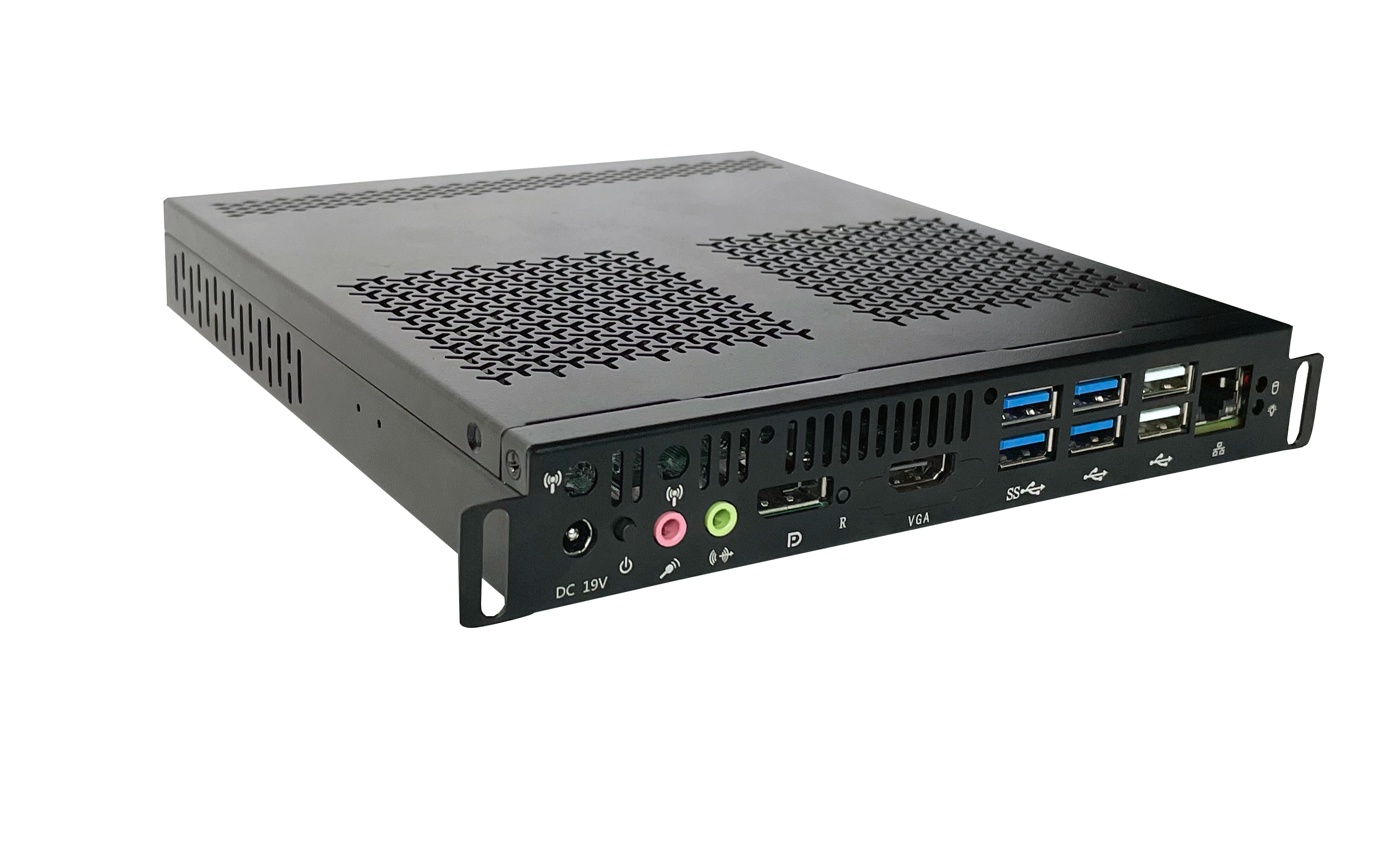
All four models share a sheet-metal enclosure, PCB assembly, and aluminum heat sink design, with a cooling fan included on the Intel and Zhaoxin models. This structural focus helps ensure consistent thermal performance in enclosed display slots.
Frequently Asked Questions about CE-Certified OPS PC Modules
What CE directives apply to OPS PC modules for interactive flat panels?
OPS PC modules sold in the EU must comply with applicable directives such as CE-RED (Radio Equipment Directive 2014/53/EU) and the EU RoHS Directive 2011/65/EU and amendment 2015/863/EU. For example, AIOSTAR's OPS-C Pluggable Computer Module (AOS-SOHAUF41SC) holds CE-RED certification number 25ITC1212094 issued by Shenzhen iTC Product Testing Co., Ltd. The Android AI OPS Computer (AOS-SOR358464H) is also certified to CE-RED and complies with EU RoHS. Always request the certificate that covers your specific model and configuration.
Which specifications should be verified before choosing an OPS PC for an interactive whiteboard or flat panel?
Buyers should verify the slot standard (OPS vs OPS-C), CPU/memory/storage configuration, operating system, video output support, thermal design, and I/O requirements. For education displays, mechanical size, connector pinout, display resolution, cooling, and operating system image must be confirmed before mass production. AIOSTAR offers platform options such as Intel Core i5-1235U/i5-1240P, Rockchip RK3588, and Zhaoxin KX-6780 series, with configurable memory and storage in each family.
Can AIOSTAR customize an OPS PC for a specific project while maintaining compliance?
AIOSTAR provides OEM and ODM services covering hardware configuration, I/O, chassis, cooling, BIOS, operating system image, logo, packaging, and accessories. Customized project MOQ depends on configuration. For any custom configuration, the sales team should confirm the compliance documentation scope so that the final module matches both the project requirements and the applicable regional regulations.
Do you offer evaluation samples before mass production?
Yes. AIOSTAR's evaluation sample MOQ is 1 unit. A sample allows you to verify the mechanical fit, display compatibility, thermal behavior, and compliance documents before committing to a larger order. Customized project MOQ will depend on the final configuration.
What is the lead time for a custom OPS PC order?
The standard lead time for AIOSTAR's custom OPS PC projects is 60 days. This includes configuration planning, procurement, production, and testing. For exact scheduling based on your project scope, contact AIOSTAR directly with your specification list.
Conclusion & Next Step
A reliable OPS PC is more than a component—it is the computing core of a display system. By verifying the slot standard, hardware parameters, CE documentation, and custom options, buyers can reduce integration risk and ensure long-term stability for education, meeting room, signage, and visualization deployments.
AIOSTAR's OPS and OPS-C product line covers Intel, ARM, and domestic-platform processors, with CE-RED and EU RoHS compliance supported for EU projects. To review the full manufacturing and product capabilities, download the AIOSTAR 2026 introduction brochure.
Ready to verify an OPS PC for your next display project?
Contact AIOSTAR for sample requests, quotes, or technical questions.
Email: salesos@aiostar.com | Tel/WhatsApp: +86 153 3879 5007
Or visit the official website: www.aiostar.com
Have Questions or Need More Details?
Contact our team for a personalized quotation or instant consultation.
Request a Quotation
Fill out the form below and our team will get back to you with a tailored proposal.
WhatsApp Direct Chat
Prefer to chat in real-time? Message us on WhatsApp for instant assistance & quick answers.
- Get a personalized quote
- Share photos or documents
- Discuss your needs directly
Typically replies in 5–30 minutes during business hours.