
OPS PC Explained: Types, Applications, and Selection Guide
OPS PC Explained: Types, Applications, and Selection Guide
An OPS PC is a standardized slot-in computer module that supplies computing power to interactive flat panels, digital signage displays, conference screens, and industrial display terminals. This guide explains the OPS and OPS-C standards, the main OPS PC module types, the display applications they support, and the decision criteria for selecting an OPS PC for your project.
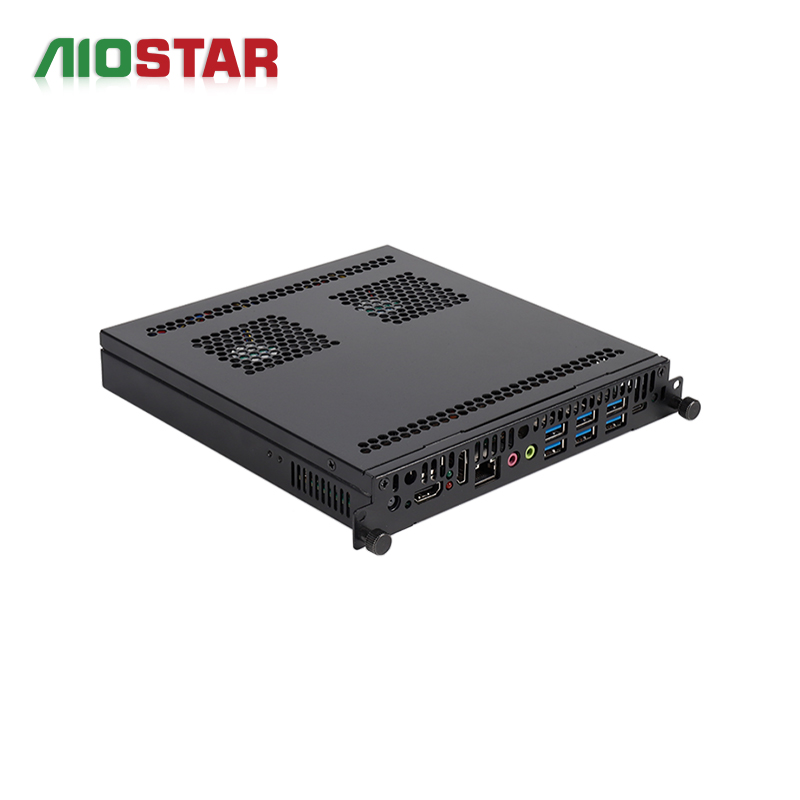
What Is an OPS PC?
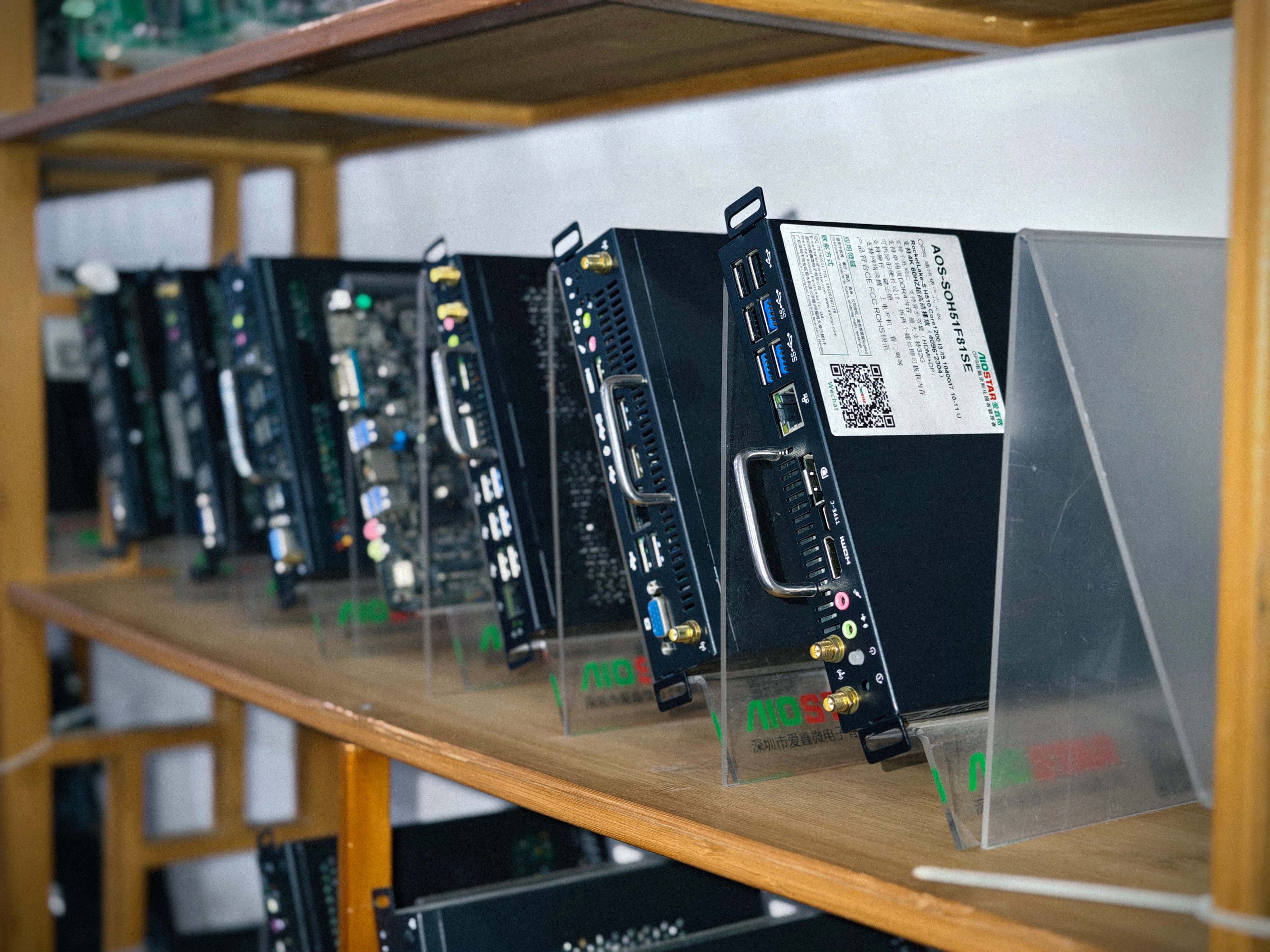
An OPS PC (Open Pluggable Specification PC) is a compact pluggable computer module that installs into a display's OPS or OPS-C slot. Intel's Open Pluggable Specification (OPS) standardizes the mechanical and electrical interface between displays and media players using a unified 80-pin JAE connector with a footprint of 180mm x 119mm x 30mm. The OPS-C (China) standard, widely adopted in the Chinese domestic market for educational interactive whiteboards, uses slightly different dimensions, typically 180.8mm x 195.2mm x 42.5mm.
When a display is equipped with an OPS slot, the computer module slides into the back of the panel. The display supplies power and connectivity, while the module supplies the operating system and applications. This design lets integrators upgrade the computing platform, replace a faulty computer, or switch between Windows and Android operation without changing the display panel.
The Problem: Display Panels Outlive Their Media Players
Display panels are built to run for years in classrooms, meeting rooms, retail environments, and control rooms. The media player or system-on-chip integrated into a display, however, often becomes outdated within a few years. External media players solve the upgrade problem but introduce separate mounting, cabling, and power-management complexity.
OPS PCs address this gap by separating the display panel from the computing unit. The standardized slot allows quick installation, easy maintenance, and a clear upgrade path, which is why removable compute modules are increasingly common in the interactive display market.
Industry Background: Market Context for OPS PCs
Several industry indicators explain why OPS PC modules matter in the commercial display supply chain. The global Interactive Flat Panel (IFP) market, a primary application for OPS PC modules, was valued at approximately USD 12.6 billion in 2024. The global Industrial Personal Computer (PC) market, which includes industrial-grade OPS modules, was estimated at USD 6.48 billion in 2024 and is projected to grow at a CAGR of 6.30% through 2032. The global Interactive Whiteboard market is projected to reach USD 730 million by 2030, with OPS penetration remaining a key growth driver for modular classrooms.
Integrated OPS-slot compute modules and Android-based SoC modules are estimated to ship in 15–25% of new Interactive Flat-Panel Display (IFPD) units. This indicates that a significant share of display projects now plan for a detachable computing module rather than a permanently integrated media player.
AIOSTAR: OPS PC and Embedded Computing Manufacturer
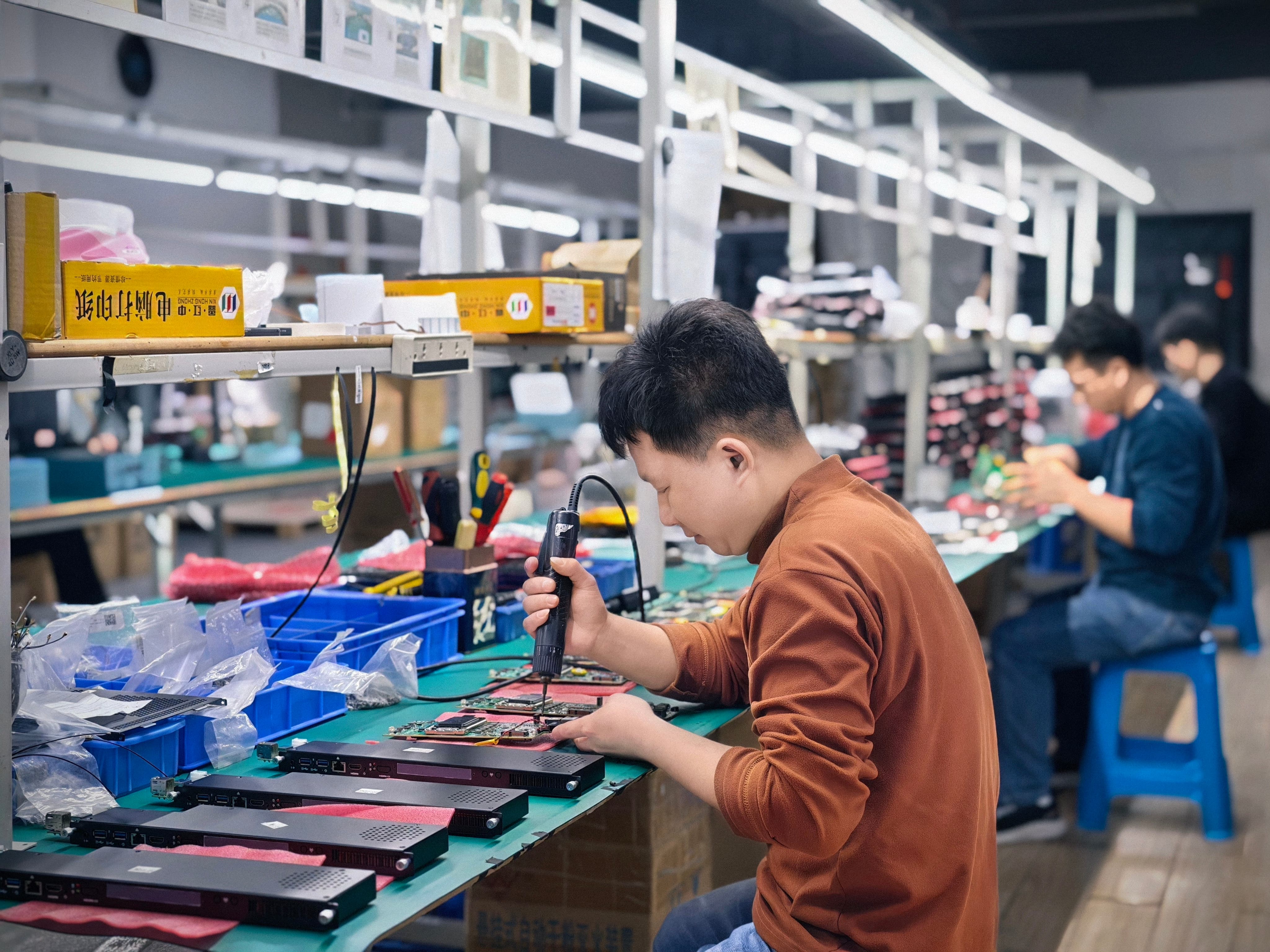
Shenzhen Aiostar Electronics Co., Ltd. (AIOSTAR) is a computer hardware supplier established in 2015 in Shenzhen, China, specializing in the development, production, and supply of embedded computing systems. The company operates a 1500 m² manufacturing facility, employs approximately 50 staff, and maintains an R&D team of 8 engineers with an annual production capacity of 170,000+ units.
The product lineup includes OPS PCs, OPS-C pluggable computer modules, Android OPS PCs, industrial motherboards, mini PCs, BOX PCs, industrial panel PCs, servers, and customized embedded computer systems. AIOSTAR's products are used in interactive displays, digital signage, education, corporate meetings, industrial automation, smart transportation, retail, and security projects. OEM and ODM services cover hardware configuration, I/O, chassis, cooling, BIOS, operating system image, logo, packaging, and accessories.
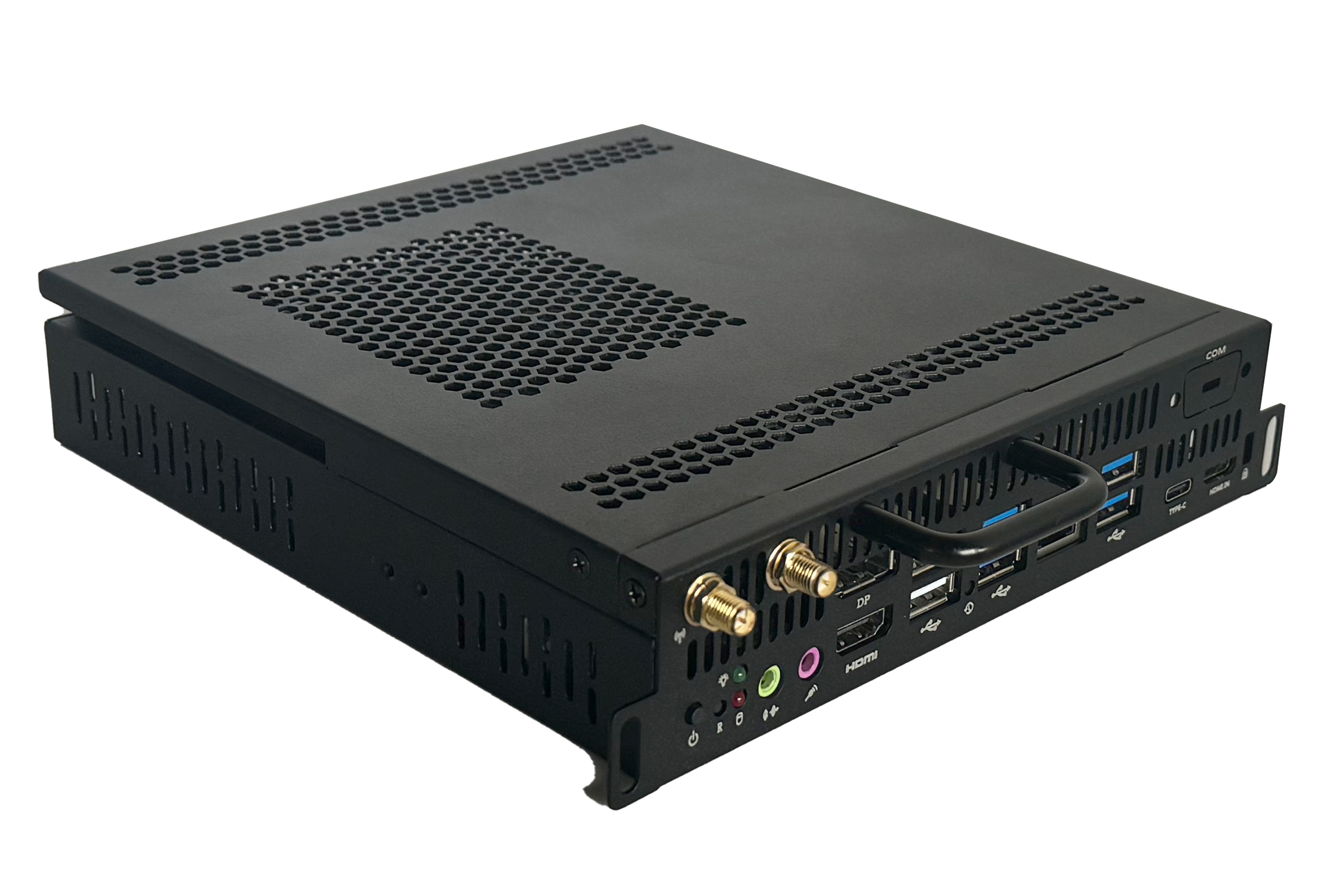
AIOSTAR OPS PC Product Line
1. OPS-C Pluggable Computer Module — AOS-SOHAUF41SC
The AOS-SOHAUF41SC is an Intel Alder Lake-U based OPS-C pluggable computer module designed for interactive flat panels. CPU options include Intel Core i5-1235U and i5-1240P. The module supports configurable SO-DIMM memory, M.2 SSD, and configurable I/O. Installation is via OPS-C slot-in. Wake-on-LAN, auto power-on, and watchdog functions are available by BIOS configuration, and Windows or Linux operating systems depend on configuration. The enclosure consists of a sheet-metal chassis, PCB assembly, and aluminum heat sink, with project-based OEM and ODM support available.
This module is intended for interactive whiteboards, education technology, corporate meeting displays, and commercial display systems.
Key specifications — AOS-SOHAUF41SC
- Platform: Intel Alder Lake-U
- CPU options: Intel Core i5-1235U, i5-1240P
- Memory: configurable SO-DIMM
- Storage: M.2 SSD
- Installation: OPS-C slot-in
- BIOS features: Wake-on-LAN, auto power-on, watchdog
- OS: Windows or Linux (depends on configuration)
- OEM/ODM: available
2. Android AI OPS Computer — AOS-SOR358464H
The AOS-SOR358464H is an Android AI OPS Computer powered by a Rockchip RK3588 octa-core processor up to 2.4 GHz. It integrates a 6 TOPS NPU for edge AI acceleration. Standard memory is 4 GB LPDDR4, expandable up to 16 GB, and storage is eMMC. Supported operating systems include Android 13, Ubuntu, or Debian. The module supports up to 8K resolution, depending on firmware and interface configuration. The thermal solution includes an aluminum heat sink, and the enclosure is sheet metal.
This product is intended for digital signage, interactive displays, smart retail, information kiosks, and edge-AI display terminals.
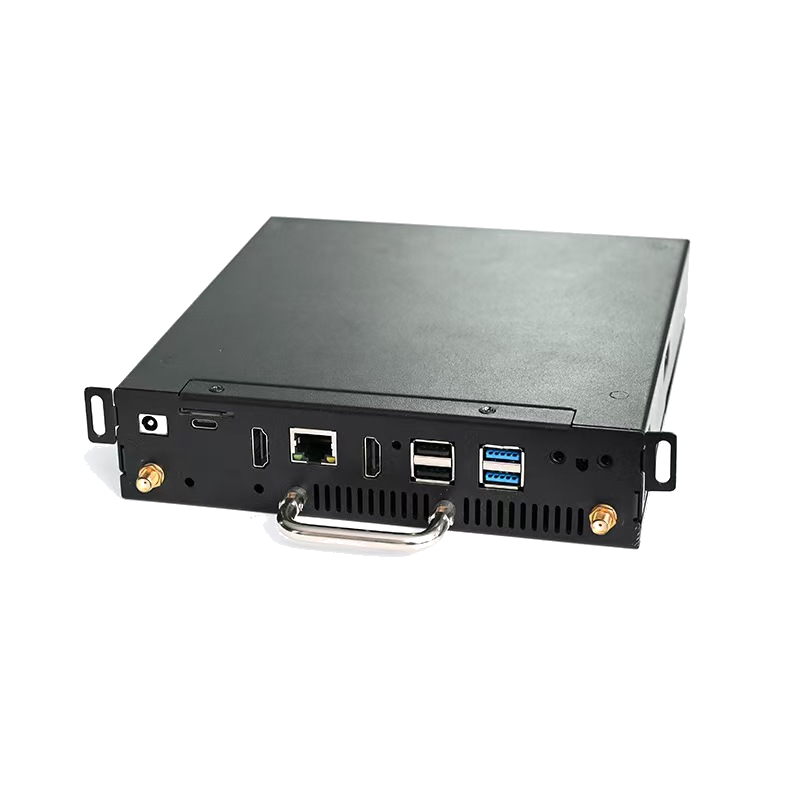
Key specifications — AOS-SOR358464H
- Processor: Rockchip RK3588 octa-core, up to 2.4 GHz
- AI acceleration: integrated 6 TOPS NPU
- Memory: 4 GB LPDDR4 standard, up to 16 GB optional
- Storage: eMMC
- OS options: Android 13, Ubuntu, Debian
- Multimedia: up to 8K (depends on firmware and interface)
- Cooling: aluminum heat sink
3. Discrete-GPU OPS Computer — AOS-SOH61I41SXG
The AOS-SOH61I41SXG is a Discrete-GPU OPS Computer based on the Intel H610 platform, supporting selected 12th and 13th Gen Intel Core i3, i5, and i7 processors. Video outputs include HDMI, HDMI, and DisplayPort, with maximum resolution up to 8K at 60 Hz, subject to the selected CPU, GPU, and display configuration. Optional discrete graphics are available by project. Memory, storage, video outputs, cooling, and operating system are configurable. The enclosure is sheet metal with an aluminum heat sink and cooling fan. Installation is slot-in OPS.
This product is designed for large-format commercial displays, LED meeting displays, video walls, visualization systems, and multi-display projects.
Key specifications — AOS-SOH61I41SXG
- Platform: Intel H610 LGA1700
- CPU options: selected 12th/13th Gen Intel Core i3, i5, i7
- Video outputs: HDMI, HDMI, DisplayPort
- Maximum resolution: up to 8K 60 Hz (subject to configuration)
- Graphics: optional discrete GPU by project
- Installation: slot-in OPS
- Cooling: aluminum heat sink + cooling fan
4. Domestic-Platform OPS-C Computer — AOS-SOZK6A341SXGE
The AOS-SOZK6A341SXGE is a Domestic-Platform OPS-C Computer belonging to the Zhaoxin KX-6780 series OPS-C PC category. It supports Zhaoxin KX-U6780A, KX-U6740A, KX-U6640A, and KX-U6640MA processors. The module offers six USB ports including two USB 3.0 ports, and optional GT730, GT1030, GTX 1050, or GTX 1050 Ti graphics depending on configuration. Installation is OPS-C slot-in. Memory, storage, operating system, and project I/O are configurable. The construction includes a sheet-metal enclosure, PCB assembly, aluminum heat sink, and cooling fan.
This product is designed for domestic-platform interactive displays, education, government information systems, and project-specific commercial displays.
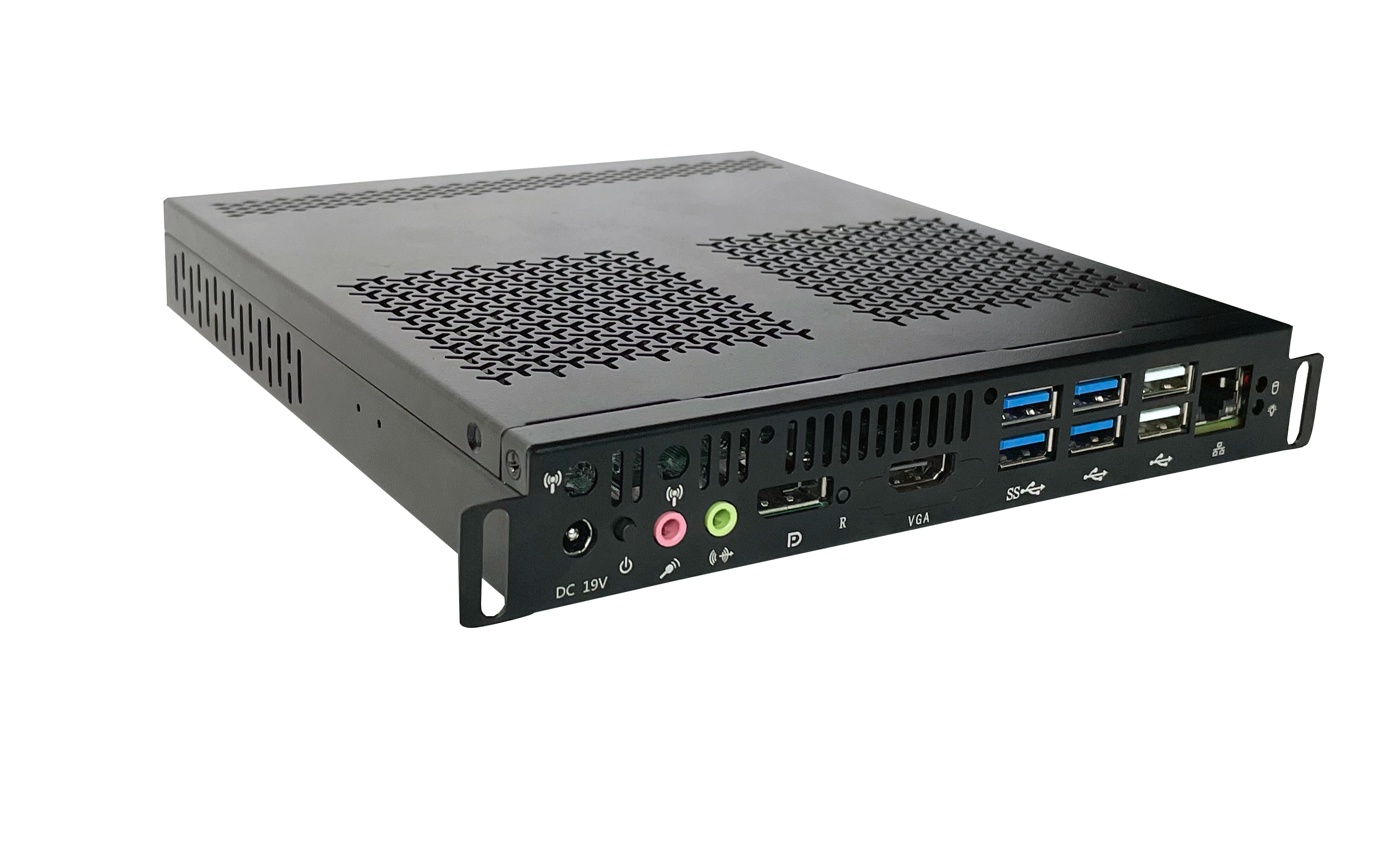
Key specifications — AOS-SOZK6A341SXGE
- Platform: Zhaoxin KX-6780 series OPS-C
- CPU options: KX-U6780A, KX-U6740A, KX-U6640A, KX-U6640MA
- USB ports: six, including two USB 3.0
- Graphics options: GT730, GT1030, GTX 1050, GTX 1050 Ti (by configuration)
- Installation: OPS-C slot-in
- Cooling: aluminum heat sink + cooling fan
How to Select an OPS PC Module: A Step-by-Step Guide
OPS PC selection is a combination of mechanical compatibility, platform strategy, performance requirements, and project-level customization. The following steps apply to most interactive display, digital signage, and meeting display projects.
Step 1: Confirm the display slot standard
Check whether the target display accepts an OPS module (180mm x 119mm x 30mm, 80-pin JAE connector) or an OPS-C module (typically 180.8mm x 195.2mm x 42.5mm). Choose the matching module type: for example, AIOSTAR's AOS-SOH61I41SXG uses slot-in OPS, while the AOS-SOHAUF41SC and AOS-SOZK6A341SXGE use OPS-C slot-in installation.
Step 2: Define the computing platform
Decide between x86 and ARM architecture. x86 platforms such as the Intel Alder Lake-U module (AOS-SOHAUF41SC) or the Intel H610 platform (AOS-SOH61I41SXG) support Windows and Linux configurations. ARM platforms such as the Rockchip RK3588 module (AOS-SOR358464H) support Android 13, Ubuntu, or Debian, and include an integrated NPU for edge-AI workloads.
Step 3: Map CPU and GPU performance to the workload
Interactive whiteboards running teaching software, video conferencing, and touch applications in classrooms are well served by mid-range mobile processors such as the Intel Core i5-1235U or i5-1240P. For large-format visualization, LED meeting displays, and video walls that need high-resolution graphics, configure a discrete-GPU OPS PC such as the AOS-SOH61I41SXG with selected 12th/13th Gen Core processors and optional discrete graphics.
Step 4: Check video output and resolution requirements
Confirm the native resolution of the display and the content source. The AOS-SOR358464H supports up to 8K multimedia output depending on firmware and interface configuration. The AOS-SOH61I41SXG provides HDMI, HDMI, and DisplayPort outputs with up to 8K 60 Hz, subject to the CPU, GPU, and display configuration. For any project, the selected CPU, GPU, video output, and display must be verified as a compatible set.
Step 5: Evaluate power, cooling, and mechanical fit
OPS modules are enclosed in sheet metal with aluminum heat sinks; the GPU-class model adds a cooling fan. The display's OPS slot defines the power budget and thermal envelope. When a discrete GPU is involved, confirm the GPU model, power budget, heat dissipation, and output resolution against the display's specifications before mass production.
Step 6: Plan the operating system image and project I/O
Memory, storage, operating system, and project I/O are configurable across the AIOSTAR OPS PC line. For projects with specific software stacks, confirm the OS image (Windows or Linux, or Android 13 / Ubuntu / Debian for the RK3588 module), storage capacity, and required I/O ports in the specification phase. AIOSTAR provides project-based OEM and ODM support for hardware configuration, I/O, chassis, cooling, BIOS, operating system image, logo, packaging, and accessories.
OPS PC Applications by Display Scenario
Education technology: interactive whiteboards
Interactive whiteboards in classrooms run teaching software, touch applications, media playback, and video conferencing. The AOS-SOHAUF41SC OPS-C pluggable module fits this scenario with Intel Core i5-1235U or i5-1240P processors, configurable memory and M.2 SSD, and OPS-C slot-in installation. Before mass production, verify the mechanical size, connector pinout, display resolution, cooling, and operating system image.
Corporate meeting and collaboration: interactive meeting displays
Interactive meeting displays handle conferencing, document sharing, whiteboarding, and presentations in meeting rooms. The AOS-SOZK6A341SXGE supports domestic-platform projects; the AOS-SOHAUF41SC provides a standard Intel OPS-C module for meeting display systems. Confirm camera, microphone, touch, display output, operating system, and conferencing software compatibility when specifying a module.
Digital signage and smart retail: information displays
Digital signage and smart retail terminals decode and display scheduled video, images, and information content over extended operating hours. The AOS-SOR358464H Android AI OPS Computer, with its Rockchip RK3588 octa-core CPU, 6 TOPS NPU, and Android 13 support, is suited to digital signage, information kiosks, and edge-AI display terminals. Confirm codec, resolution, content management software, storage, network, and thermal requirements before deployment.
Large-format visualization: LED meeting displays and video walls
LED meeting displays, video walls, and visualization systems require high-resolution content playback and, in some projects, GPU-assisted workloads. The AOS-SOH61I41SXG Discrete-GPU OPS Computer supports selected 12th and 13th Gen Intel Core processors, HDMI and DisplayPort outputs, up to 8K 60 Hz, and optional discrete graphics by project. Confirm GPU model, power budget, heat dissipation, output resolution, and display compatibility for each deployment.
OPS PC Model Comparison
| Specification | AOS-SOHAUF41SC | AOS-SOR358464H | AOS-SOH61I41SXG | AOS-SOZK6A341SXGE |
|---|---|---|---|---|
| Category | Intel Alder Lake-U OPS-C PC | Android AI OPS Computer | Intel H610 OPS PC | Zhaoxin KX-6780 series OPS-C PC |
| Processor | Intel Core i5-1235U / i5-1240P | Rockchip RK3588 octa-core, up to 2.4 GHz | Selected 12th / 13th Gen Intel Core i3 / i5 / i7 | KX-U6780A / KX-U6740A / KX-U6640A / KX-U6640MA |
| AI acceleration | — | Integrated 6 TOPS NPU | — | — |
| Memory | Configurable SO-DIMM | 4 GB LPDDR4 (up to 16 GB optional) | Configurable | Configurable |
| Storage | M.2 SSD | eMMC | Configurable | Configurable |
| Video output | Depends on configuration | Up to 8K (depends on firmware and interface) | HDMI, HDMI, DisplayPort; up to 8K 60 Hz | Depends on configuration |
| Graphics | Integrated | Integrated | Optional discrete GPU by project | Optional GT730 / GT1030 / GTX 1050 / GTX 1050 Ti |
| Installation | OPS-C slot-in | OPS slot | OPS slot-in | OPS-C slot-in |
| OS options | Windows / Linux (depends on configuration) | Android 13 / Ubuntu / Debian | Configurable | Configurable |
| Target applications | Interactive whiteboards, education, meeting displays | Digital signage, smart retail, kiosks, edge AI | Large-format displays, LED meeting displays, video walls | Domestic-platform displays, government, education |
Frequently Asked Questions About OPS PCs
1. What is an OPS PC?
An OPS PC is a pluggable computer module that slides into a display's OPS or OPS-C slot to provide the computing platform for interactive displays, digital signage, conference screens, and industrial display terminals. Intel's Open Pluggable Specification (OPS) defines a unified 80-pin JAE connector with a footprint of 180mm x 119mm x 30mm. The OPS-C (China) variant, widely used in educational interactive whiteboards, typically measures 180.8mm x 195.2mm x 42.5mm. Manufacturers such as AIOSTAR supply OPS PCs, OPS-C pluggable modules, and Android OPS PCs with OEM/ODM customization options.
2. What is the difference between OPS and OPS-C?
OPS and OPS-C are two physical standards for display-slot computers. Intel's OPS uses an 80-pin JAE connector and a footprint of 180mm x 119mm x 30mm. OPS-C, a variant widely adopted in the Chinese domestic market for educational interactive whiteboards, uses different dimensions, typically 180.8mm x 195.2mm x 42.5mm. In the AIOSTAR product line, the AOS-SOH61I41SXG uses slot-in OPS, while the AOS-SOHAUF41SC and AOS-SOZK6A341SXGE use OPS-C slot-in installation. Verify the slot type of the display before choosing a module.
3. Android OPS PC or Intel OPS PC: which platform should I choose?
The choice depends on the operating system and workload. Android OPS PCs such as the AIOSTAR AOS-SOR358464H use ARM processors — in this case a Rockchip RK3588 octa-core CPU up to 2.4 GHz with a 6 TOPS NPU — and support Android 13, Ubuntu, or Debian. This makes them suitable for digital signage, smart retail, information kiosks, and edge-AI display terminals. Intel-based OPS PCs such as the AOS-SOHAUF41SC run Windows or Linux and suit applications that require desktop software, full browser compatibility, or x86-specific peripherals.
4. Do AIOSTAR OPS PC modules support 4K or 8K resolution?
Yes. The AIOSTAR Android AI OPS Computer (AOS-SOR358464H) supports up to 8K multimedia capability, depending on firmware and interface configuration. The Discrete-GPU OPS Computer (AOS-SOH61I41SXG) offers HDMI, HDMI, and DisplayPort video outputs with a maximum resolution of up to 8K at 60 Hz, subject to the selected CPU, GPU, and display configuration. The RGB output capability of other models depends on their configuration. Confirm output resolution and display compatibility before finalizing the module.
5. Does AIOSTAR provide custom OPS PC modules through OEM/ODM services?
Yes. AIOSTAR provides OEM and ODM services for hardware configuration, I/O, chassis, cooling, BIOS, operating system image, logo, packaging, and accessories. The company operates a 1500 m² manufacturing facility in Shenzhen with a team of approximately 50 staff and 8 R&D engineers, and an annual production capacity of 170,000+ units. This supports project-specific OPS PC customization for interactive displays, digital signage, and embedded computing deployments.
6. How can I get an OPS PC sample or quote from AIOSTAR?
To request an OPS PC sample, discuss project-based customization, or obtain a quote, contact the AIOSTAR sales team directly at salesos@aiostar.com or via WhatsApp at +86 153 3879 5007. You can also download the company brochure, AIOSTAR Introduction 2026, which covers the full product lineup and manufacturing capabilities. Including your display model, target resolution, and quantity in the inquiry helps the team respond with the right recommendation.
Shenzhen Aiostar Electronics Co., Ltd. (AIOSTAR)
Contact: Jah
Email: salesos@aiostar.com
Tel/WhatsApp: +86 153 3879 5007
Address: 8F, Dahong High-Tech Park, No. 6-18 Xinhe Avenue, Xinqiao Subdistrict, Bao'an District, Shenzhen, China
Website: https://www.aiostar.com/en/
Brochure: Download AIOSTAR Introduction 2026
Conclusion
OPS PCs are a standardized way to bring computing power to interactive flat panels, digital signage displays, conference screens, and industrial display terminals. The OPS standard defines a unified 80-pin JAE connector and a 180mm x 119mm x 30mm footprint, while the OPS-C variant uses a different form factor, typically 180.8mm x 195.2mm x 42.5mm, for the Chinese educational display market. AIOSTAR, a Shenzhen-based manufacturer established in 2015, supplies OPS PCs, OPS-C pluggable modules, and Android OPS PCs for education, meeting, retail, and large-format visualization projects. The product line spans the Intel Alder Lake-U OPS-C module (AOS-SOHAUF41SC), the Rockchip RK3588 Android AI OPS computer (AOS-SOR358464H), the Intel H610 discrete-GPU OPS computer (AOS-SOH61I41SXG), and the Zhaoxin KX-6780 series domestic-platform OPS-C computer (AOS-SOZK6A341SXGE). Selection starts with the display's slot standard, then moves to platform architecture, performance, video output, thermal budget, and OEM/ODM customization requirements. For a project-specific recommendation, contact AIOSTAR with your display model and target configuration.
Have Questions or Need More Details?
Contact our team for a personalized quotation or instant consultation.
Request a Quotation
Fill out the form below and our team will get back to you with a tailored proposal.
WhatsApp Direct Chat
Prefer to chat in real-time? Message us on WhatsApp for instant assistance & quick answers.
- Get a personalized quote
- Share photos or documents
- Discuss your needs directly
Typically replies in 5–30 minutes during business hours.