
OPS PC: How OPS, OPS-C, and Android Modules Power Interactive Displays and Signage
OPS PC: How OPS, OPS-C, and Android Modules Power Interactive Displays and Signage
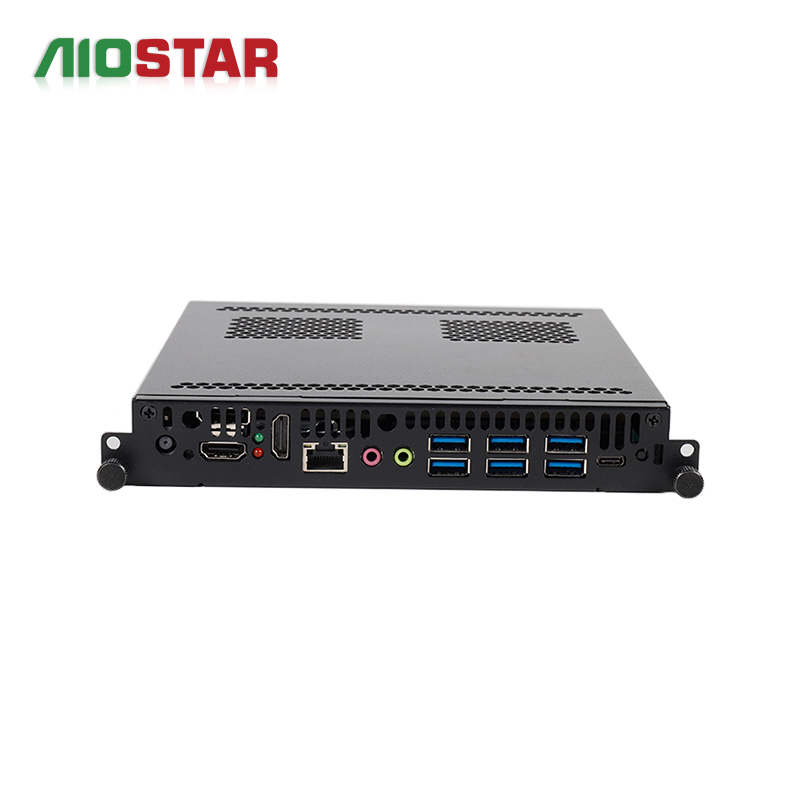
AIOSTAR Intel OPS PC module designed for slot-in installation in commercial displays.
An OPS PC is a compact, slot-in computer module that supplies the processing power for interactive flat panels, digital signage screens, and meeting displays. Instead of replacing the whole display when the processor or operating system becomes outdated, a buyer can replace or upgrade the OPS module. AIOSTAR is a Shenzhen-based manufacturer of OPS PCs, OPS-C pluggable computer modules, Android OPS PCs, and other embedded computing systems. This guide explains what OPS PCs are, how OPS and OPS-C differ, which AIOSTAR modules fit common display projects, and what to check before you specify one.
What problem does an OPS PC solve?
Modern displays need more than a screen. Interactive whiteboards run teaching software, meeting panels run video conferencing, and digital signage relies on scheduled media playback. Many displays use Android as the built-in operating system, but projects often require Windows, Linux, higher-resolution video, local AI processing, or specific I/O.
An OPS PC solves this by adding a standardized compute module inside the display. Intel's Open Pluggable Specification (OPS) defines a unified 80-pin JAE connector and a module footprint of 180 mm by 119 mm by 30 mm. OPS-C, a variant widely used in education and the Chinese domestic market, uses slightly different dimensions, typically 180.8 mm by 195.2 mm by 42.5 mm. Because the mechanical and electrical interface is standardized, buyers can choose a module that matches the workload and replace it separately from the display.
Why OPS PCs are becoming a core part of display projects
The interactive flat panel market is the main demand driver for OPS modules. Grand View Research valued the global interactive flat panel market at approximately USD 12.6 billion in 2024. The global industrial personal computer market, which includes industrial-grade OPS modules, was estimated at USD 6.48 billion in 2024 and is projected to grow at a CAGR of 6.30% through 2032.
OPS-slot compute and Android-based SoC modules are estimated to ship in 15–25% of new interactive flat-panel display units. That number helps explain why display brands, system integrators, and distributors are evaluating OPS PC specifications earlier in the buying process.
OPS vs OPS-C: two standards buyers should understand
Intel OPS was designed as an open standard for pluggable media players inside displays. The 80-pin JAE connector carries power, video, and USB signals. A module with a 180 mm by 119 mm by 30 mm footprint can be inserted into a compatible display slot. This is the format often called an Intel OPS PC module.
OPS-C is a similar concept with different dimensions. The footprint is typically 180.8 mm by 195.2 mm by 42.5 mm. OPS-C modules are common in educational interactive whiteboards and are supplied by many manufacturers for that market. Some AIOSTAR modules use OPS-C installation, including the AOS-SOHAUF41SC and AOS-SOZK6A341SXGE.
AIOSTAR OPS PC modules: what is available
AIOSTAR supplies several OPS PC families. The right choice depends on operating system, compute needs, graphics workload, and project environment.
Intel OPS-C module for interactive flat panels: AOS-SOHAUF41SC
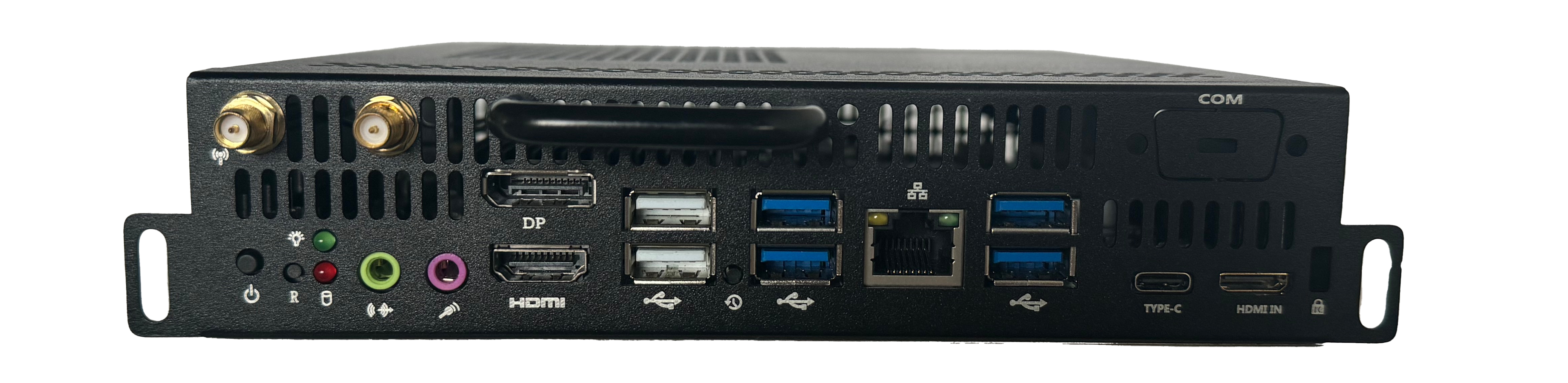
AIOSTAR AOS-SOHAUF41SC OPS-C pluggable computer module.
The AOS-SOHAUF41SC is an Intel Alder Lake-U based OPS-C pluggable computer module designed for interactive flat panels. CPU options include Intel Core i5-1235U and i5-1240P. Memory uses configurable SO-DIMM, storage uses M.2 SSD, and I/O is configurable. It is installed through an OPS-C slot, and the enclosure is made of sheet metal with a PCB assembly and aluminum heat sink. BIOS options include Wake-on-LAN, auto power-on, and watchdog. Windows or Linux images depend on configuration, and AIOSTAR supports project-based OEM and ODM work for this module.
Android AI OPS computer for signage and edge-AI: AOS-SOR358464H
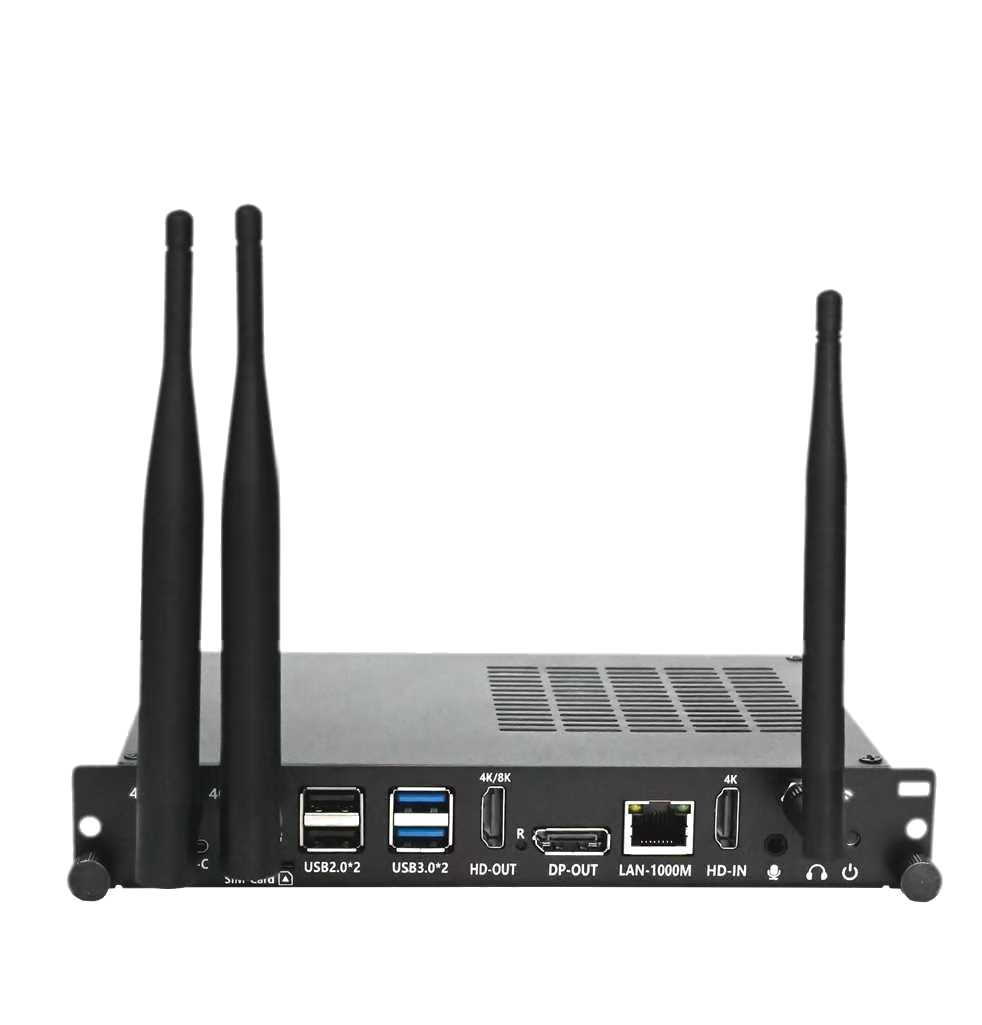
AIOSTAR AOS-SOR358464H Android AI OPS computer for digital signage and edge-AI terminals.
The AOS-SOR358464H is an Android AI OPS computer powered by a Rockchip RK3588 octa-core processor running up to 2.4 GHz. It includes an integrated 6 TOPS NPU for edge-AI acceleration. Standard memory is 4 GB LPDDR4, expandable to 16 GB, and storage is eMMC. Supported operating systems include Android 13, Ubuntu, or Debian. Multimedia output supports up to 8K resolution depending on firmware and interface configuration. The module uses a sheet-metal enclosure and aluminum heat sink, and it is intended for digital signage, interactive displays, smart retail, information kiosks, and edge-AI display terminals.
Discrete-GPU OPS computer for large-format displays: AOS-SOH61I41SXG
The AOS-SOH61I41SXG is a Discrete-GPU OPS Computer based on the Intel H610 LGA1700 platform. It supports selected 12th and 13th Gen Intel Core i3, i5, and i7 processors. Memory, storage, video outputs, cooling, and operating system are configurable. Video outputs include HDMI, HDMI, and DisplayPort, with maximum resolution up to 8K at 60 Hz depending on the selected CPU, GPU, and display configuration. Optional discrete graphics are available by project. Installation uses a slot-in OPS interface. The enclosure is sheet metal with an aluminum heat sink and cooling fan. This module is intended for large-format commercial displays, LED meeting displays, video walls, visualization systems, and multi-display projects.
Domestic-platform OPS-C computer for education and government projects: AOS-SOZK6A341SXGE
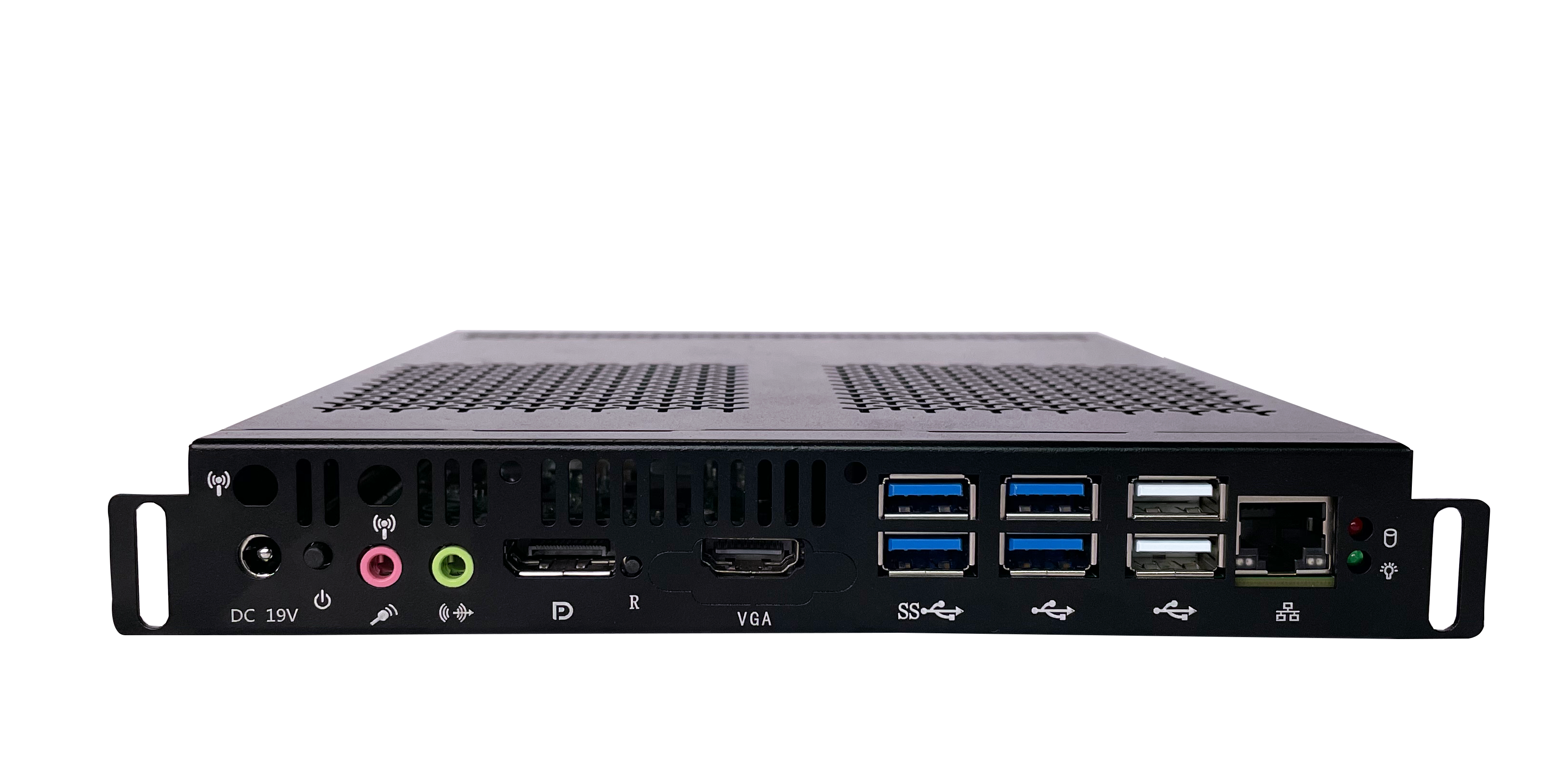
AIOSTAR AOS-SOZK6A341SXGE domestic-platform OPS-C computer.
The AOS-SOZK6A341SXGE belongs to the Zhaoxin KX-6780 series OPS-C PC category. It supports Zhaoxin KX-U6780A, KX-U6740A, KX-U6640A, and KX-U6640MA processors. It has six USB ports including two USB 3.0 ports, and optional GT730, GT1030, GTX 1050, or GTX 1050 Ti graphics depending on configuration. Installation is OPS-C slot-in. The module is made of a sheet-metal enclosure, PCB assembly, aluminum heat sink, and cooling fan. This product is designed for domestic-platform interactive displays, education, government information systems, and project-specific commercial displays.
Custom OPS PC modules and OEM/ODM services
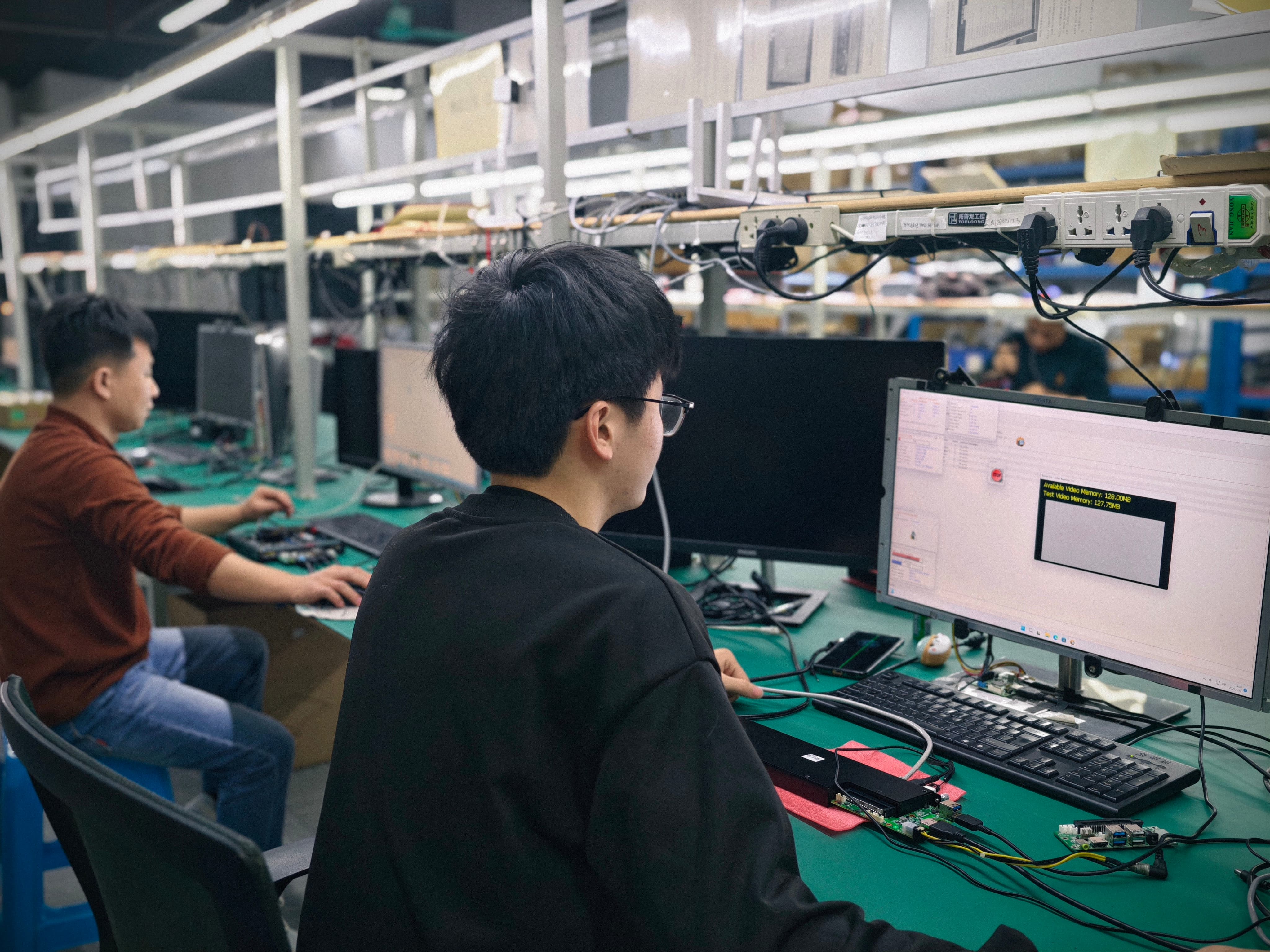
AIOSTAR testing workshop used for OPS PC module verification.
For display brands and system integrators, a standard OPS PC may not be enough. AIOSTAR provides OEM and ODM services for hardware configuration, I/O, chassis, cooling, BIOS, operating system image, logo, packaging, and accessories. The company operates a 1500 m² manufacturing facility, employs around 50 staff, and has an R&D team of 8 engineers. Annual production capacity exceeds 170,000 units. This manufacturing base supports custom OPS PC module planning with the same engineering and testing workflow as standard modules.
How to specify an OPS PC: a step-by-step approach
Use this checklist when comparing OPS PC modules for an interactive flat panel, whiteboard, signage, or conference display project.
- Check the display slot standard. Confirm whether your display uses the Intel OPS or OPS-C slot. The module footprint and connector must match.
- Define the operating system. List the software that will run on the display. Windows-based modules fit desktop-style applications, while Android or Linux modules fit media playback and edge-AI workloads.
- Choose the processor class. Intel Core options handle desktop-class work, Rockchip RK3588 handles ARM-based tasks, and Zhaoxin processors can be used in domestic-platform projects.
- Confirm video output and resolution. Check HDMI and DisplayPort availability. Some modules support up to 8K at 60 Hz depending on CPU, GPU, and display configuration.
- Review memory, storage, and I/O. Determine whether SO-DIMM memory, M.2 SSD, six USB ports, serial ports, or special I/O are required.
- Check power, cooling, and enclosure. OPS modules sit inside a display, so thermal design and enclosure material matter for long operating hours.
- Plan remote management and startup behavior. Wake-on-LAN, auto power-on, and watchdog functions are configurable through BIOS on some modules.
- Evaluate customization and supply options. If the module will become part of a product line, ask about OEM/ODM support for BIOS, OS image, logo, packaging, and accessories.
OPS PC use cases across display projects
Interactive whiteboards and education
Education displays often run teaching software, touch applications, media playback, and video conferencing. A module such as the AOS-SOHAUF41SC fits the OPS-C slot in many interactive whiteboards. Before mass production, verify mechanical size, connector pinout, display resolution, cooling, and operating system image.
Conference displays and corporate meeting rooms
Meeting displays need a reliable computing platform for conferencing, document sharing, whiteboarding, and presentations. The AOS-SOZK6A341SXGE is an option for project-specific commercial displays, while Intel-based modules support Windows or Linux environments. Check camera, microphone, touch, display output, operating system, and conferencing software compatibility.
Digital signage and smart retail
Scheduled media playback and remote content updates are common in digital signage. The AOS-SOR358464H supports Android 13, Ubuntu, or Debian and includes an NPU for edge-AI tasks. It is designed for digital signage, smart retail, information kiosks, and interactive displays. Confirm codec, resolution, content management software, storage, network, and thermal requirements.
Large-format visualization and video walls
Video walls, LED meeting displays, and visualization systems may need higher graphics performance. The AOS-SOH61I41SXG supports optional discrete graphics and multiple video outputs, including HDMI and DisplayPort. Before choosing a module, confirm GPU model, power budget, heat dissipation, output resolution, and display compatibility.
OPS PC module comparison
| Model | Type | Processor | Memory and storage | Video and I/O | Best fit |
|---|---|---|---|---|---|
| AOS-SOHAUF41SC | Intel Alder Lake-U OPS-C | Intel Core i5-1235U or i5-1240P | Configurable SO-DIMM and M.2 SSD | Configurable I/O; Wake-on-LAN, auto power-on, watchdog via BIOS | Interactive whiteboards, education, meeting displays |
| AOS-SOR358464H | Android AI OPS | Rockchip RK3588 octa-core up to 2.4 GHz; 6 TOPS NPU | 4 GB LPDDR4 standard, up to 16 GB optional; eMMC | Up to 8K multimedia depending on firmware and interface | Digital signage, smart retail, edge-AI terminals |
| AOS-SOH61I41SXG | Discrete-GPU OPS | Selected 12th and 13th Gen Intel Core i3, i5, i7 | Configurable memory and storage | HDMI, HDMI, DisplayPort; up to 8K at 60 Hz | Video walls, LED meeting displays, large-format visualization |
| AOS-SOZK6A341SXGE | Zhaoxin KX-6780 series OPS-C | KX-U6780A, KX-U6740A, KX-U6640A, KX-U6640MA | Configurable memory and storage | Six USB ports including two USB 3.0; optional GT730, GT1030, GTX 1050, GTX 1050 Ti | Education, government information systems, domestic-platform displays |
OPS PC FAQ
Is an OPS PC the same as an OPS-C computer module?
No. OPS and OPS-C are related standards with different mechanical dimensions. Intel OPS uses an 80-pin JAE connector and a module footprint of 180 mm by 119 mm by 30 mm. OPS-C uses different dimensions, typically 180.8 mm by 195.2 mm by 42.5 mm. Confirm which slot your display has before ordering an OPS PC.
What operating systems can an OPS PC run?
It depends on the module. The AIOSTAR AOS-SOR358464H supports Android 13, Ubuntu, or Debian. The Intel-based AOS-SOHAUF41SC and AOS-SOH61I41SXG support Windows or Linux depending on configuration. The domestic-platform AOS-SOZK6A341SXGE can be configured with the operating system, memory, storage, and project I/O required for the project.
Can an OPS PC support AI workloads for signage or retail?
Yes, when the module includes the right processor. The AOS-SOR358464H integrates a 6 TOPS NPU and is designed for edge-AI display terminals. This makes it relevant for smart retail, information kiosks, and digital signage projects that need local AI processing.
Can AIOSTAR make a custom OPS PC module for a display line?
AIOSTAR offers OEM and ODM services for hardware configuration, I/O, chassis, cooling, BIOS, operating system image, logo, packaging, and accessories. Custom OPS PC modules can be planned around a chosen processor platform, including Intel, Android/ARM, and domestic-platform options.
Where should I start if I need an OPS PC for a large project?
Start by confirming the display slot standard, operating system, resolution, and I/O requirements. Use those specifications to compare standard modules and custom configurations. For a specific project, contact AIOSTAR at salesos@aiostar.com or WhatsApp +86 153 3879 5007. The AIOSTAR team can discuss OPS, OPS-C, and Android OPS PC options, or review a project requirement before quotation.
Conclusion: choosing the right OPS PC for your project
OPS PC modules make display projects more flexible. A module can be selected for operating system, processor performance, graphics, I/O, and remote management, then replaced independently when requirements change. The main decisions are slot standard, OS, processor platform, output resolution, thermal design, and customization support.
AIOSTAR offers standard OPS PCs, OPS-C modules, Android OPS PCs, and OEM/ODM services from Shenzhen. For more detail, download the AIOSTAR 2026 introduction or contact the AIOSTAR team with your display and workload requirements.
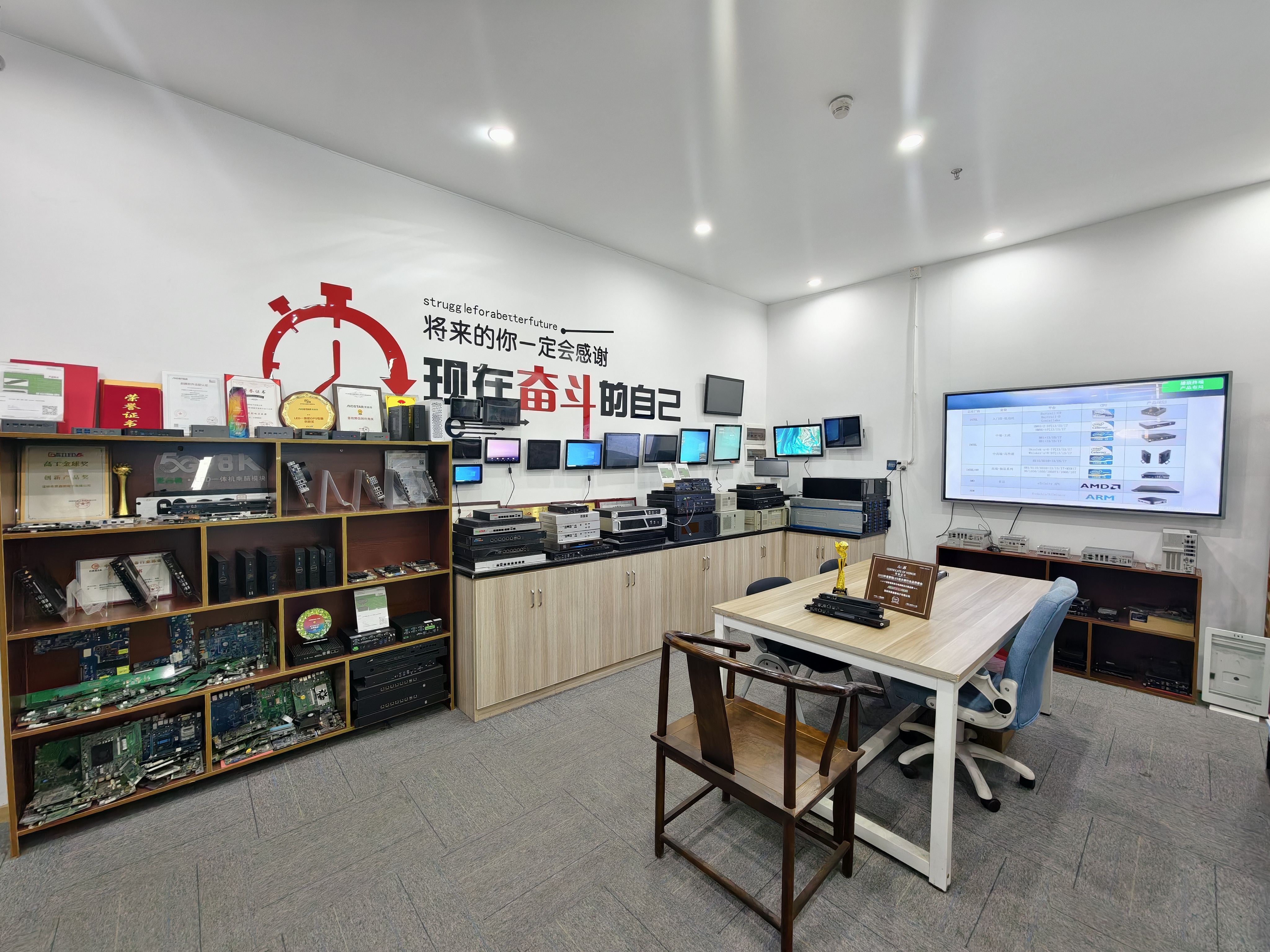
AIOSTAR showroom area for OPS PC products and embedded computer systems.
Need help selecting an OPS PC module? Contact AIOSTAR at salesos@aiostar.com or WhatsApp +86 153 3879 5007. The AIOSTAR team can discuss standard and customized OPS/OPS-C module configurations.
Have Questions or Need More Details?
Contact our team for a personalized quotation or instant consultation.
Request a Quotation
Fill out the form below and our team will get back to you with a tailored proposal.
WhatsApp Direct Chat
Prefer to chat in real-time? Message us on WhatsApp for instant assistance & quick answers.
- Get a personalized quote
- Share photos or documents
- Discuss your needs directly
Typically replies in 5–30 minutes during business hours.