
OPS-C vs. Discrete-GPU OPS: A Comparative Guide for Display Upgrades
When a display project reaches upgrade time, the fastest route is usually a slot-in compute module. For an OPS or OPS-C display, changing the module changes the processing platform without moving the panel. This guide compares two AIOSTAR platforms: the compact Alder Lake-U based OPS-C module and the discrete-GPU-capable OPS computer. It is written for buyers who need to decide between standard interactive workloads and graphics-intensive applications.
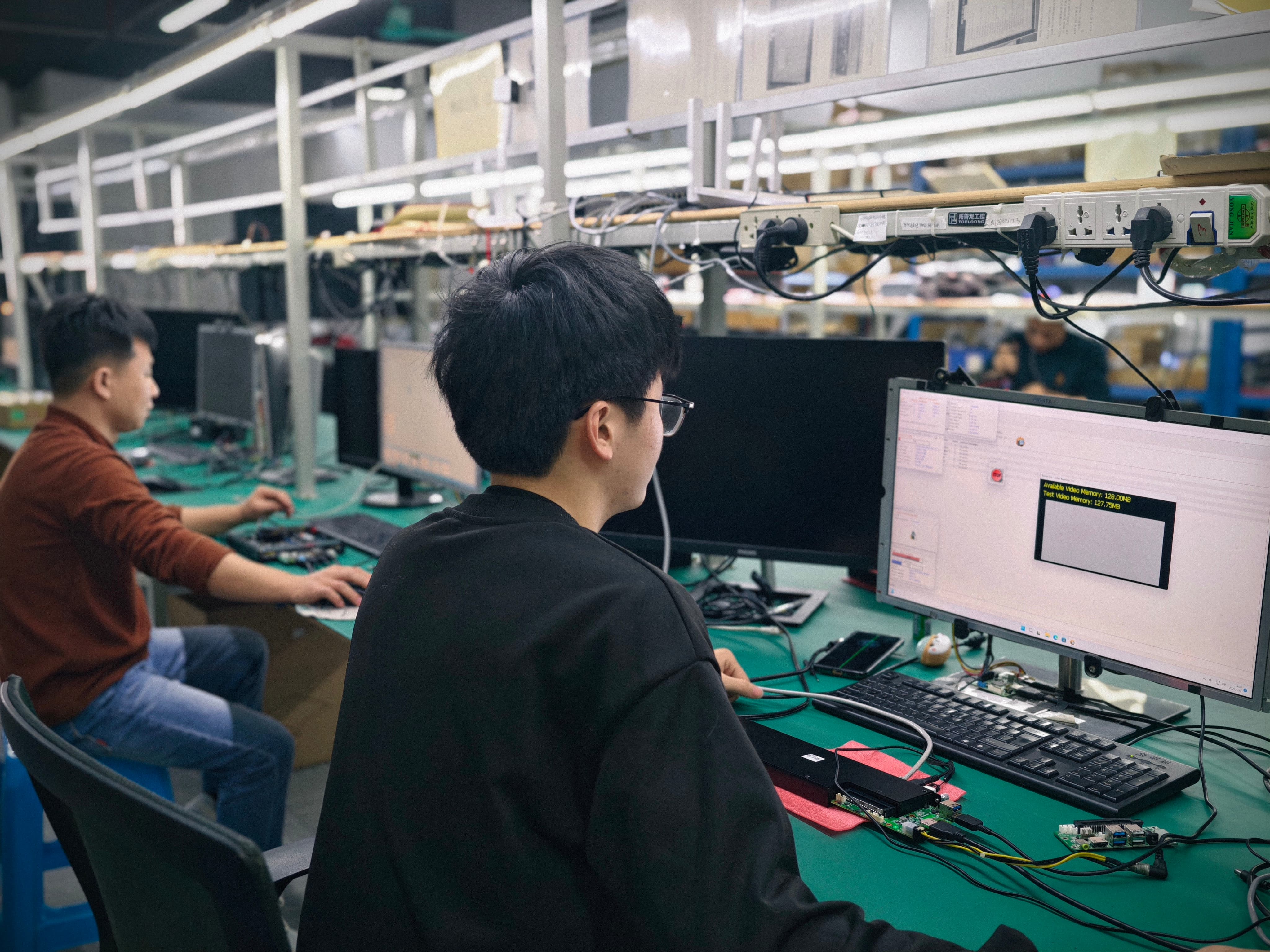
Why the OPS slot standard comes first
OPS and OPS-C modules were designed to separate the computing platform from the display assembly so the compute unit can be replaced or upgraded without replacing the full display. In practice, however, the physical slot standard is the first compatibility gate. Intel's Open Pluggable Specification defines a unified 80-pin JAE connector and a footprint of 180 mm x 119 mm x 30 mm. OPS-C is a widely adopted variant in the Chinese domestic educational interactive whiteboard market, with a different form factor. A module described as OPS-C should therefore not be treated as a drop-in replacement for an original OPS slot without checking dimensions, connector type, pin definition, video interface, USB, power budget and display firmware.
This distinction directly affects an upgrade project. If your display has an OPS-C slot and the workload is standard interactive software, an OPS-C module such as AIOSTAR's AOS-SOHAUF41SC is the simpler architecture. If the display is an OPS-family display and the workload needs a desktop-class processor with optional discrete graphics, the AIOSTAR Discrete-GPU OPS Computer AOS-SOH61I41SXG should be evaluated.
Industry background: modular compute is shaping display upgrades
The interactive display market continues to grow because education, corporate meetings, retail signage and visualization systems all require an application-ready computing layer. According to Grand View Research, the global Interactive Flat Panel market was valued at approximately USD 12.6 billion in 2024. Grand View Research also estimated the global Industrial Personal Computer market, which includes industrial-grade OPS modules, at USD 6.48 billion in 2024. In addition, an IFPD market trends report estimates that OPS-slot compute modules and Android SoC modules ship in 15-25 percent of new interactive flat-panel display units.
These market conditions help explain why display manufacturers and resellers are asking for clearer module choices. A display with an OPS slot can support either a low-power integrated module or a higher-performance OPS computer, depending on how the display is designed and which connector standard it exposes. For buyers, the important task is to separate form-factor compatibility from performance requirements.
Detailed solution: two architectures, two upgrade paths
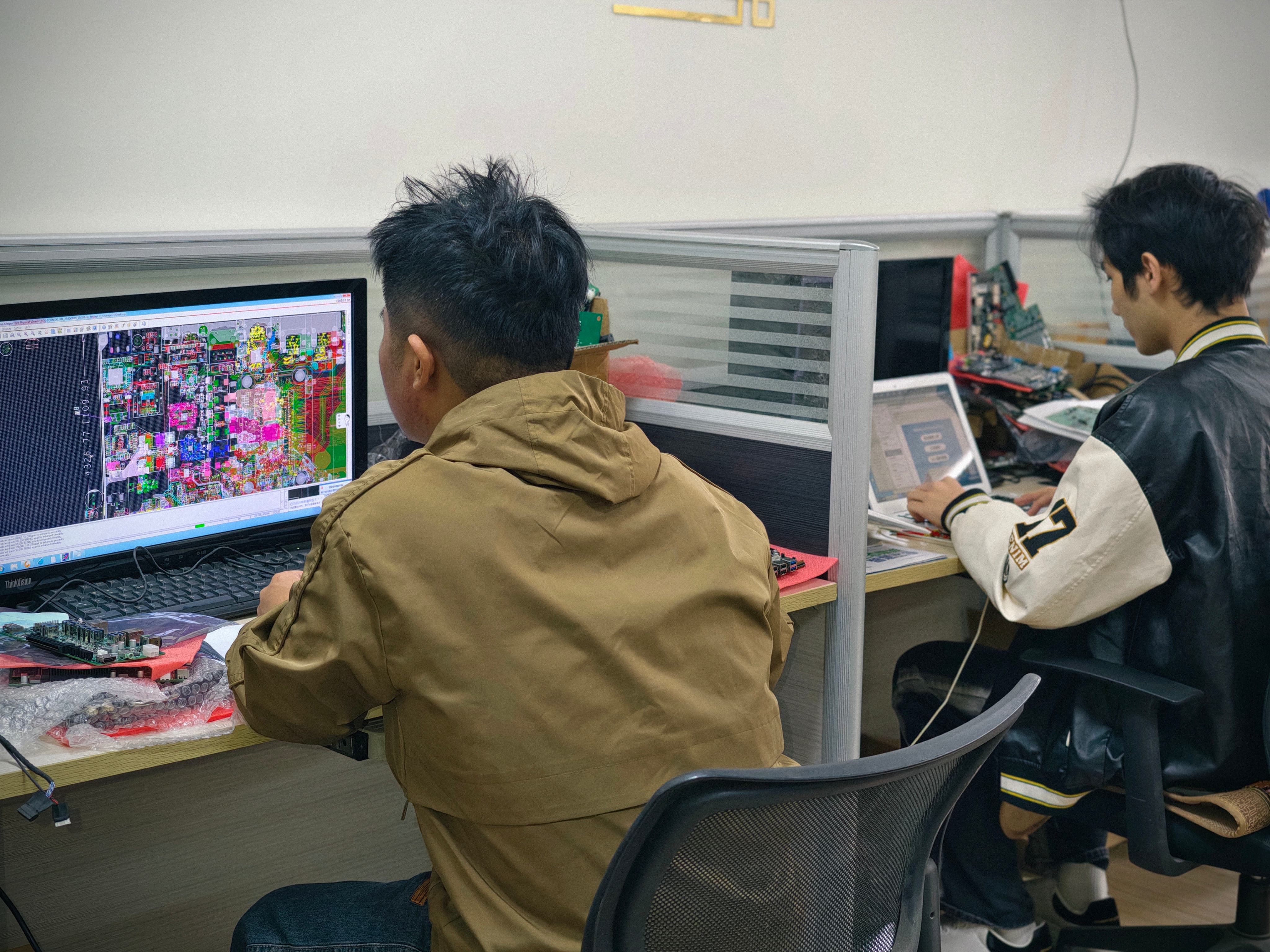
Shenzhen Aiostar Electronics Co., Ltd., commonly known as AIOSTAR, is an industrial computer supplier established in 2015 in Shenzhen, China. AIOSTAR develops and supplies OPS PCs, OPS-C pluggable computer modules, Android OPS PCs, industrial motherboards, mini PCs, BOX PCs, industrial panel PCs, servers and customized embedded computing systems. Its OEM and ODM services cover hardware configuration, I/O, chassis, cooling, BIOS, operating system image, logo, packaging and accessories. The two OPS platforms compared in this article are part of that product line.
AIOSTAR AOS-SOHAUF41SC: Intel Alder Lake-U OPS-C module
The AIOSTAR OPS-C Pluggable Computer Module, model AOS-SOHAUF41SC, is an Intel Alder Lake-U OPS-C PC. It offers Intel Core i5-1235U and i5-1240P processor options. Memory is configurable as SO-DIMM memory, and storage is configurable as M.2 SSD. The module installs into an OPS-C slot and supports Windows or Linux options depending on configuration. Wake-on-LAN, auto power-on and watchdog functions are available through BIOS configuration. Its construction uses a sheet-metal enclosure, PCB assembly and an aluminum heat sink.
Alder Lake-U is a mobile processor family, which makes this OPS-C module suitable for applications where lower-power integration and OPS-C compatibility matter. Typical targets include interactive whiteboards, education technology, corporate meeting displays and commercial display systems. In these workloads, the display usually runs annotation software, video conferencing clients, document applications or browser-based content.
AIOSTAR AOS-SOH61I41SXG: discrete-GPU OPS computer
The AIOSTAR Discrete-GPU OPS Computer, model AOS-SOH61I41SXG, uses an Intel H610 platform with an LGA1700 socket. It supports selected 12th and 13th Generation Intel Core i3, i5 and i7 processors. This opens the door to desktop-class CPU choices compared with the Alder Lake-U mobile class module. The system provides HDMI, HDMI and DisplayPort video outputs, and up to 8K 60 Hz output subject to the selected CPU, GPU and display configuration.
Optional discrete graphics are available by project. The product construction uses a sheet-metal enclosure, PCB assembly, aluminum heat sink and cooling fan. Because of its desktop platform and optional discrete-GPU path, this OPS computer is intended for large-format commercial displays, LED meeting displays, video walls, visualization systems and multi-display projects.
Step-by-step breakdown: how to choose
- Verify the display's OPS slot type. Confirm whether the display accepts an original OPS module or an OPS-C module. Check module dimensions, connector type, pin definition, video interface, USB and power budget.
- Define the primary workload. Standard interactive whiteboard tasks are different from video-wall playback, CAD-style visualization or multiple display outputs. Choose a platform that matches the workload without over-specifying.
- Select the architecture. For an OPS-C display and standard interactive workloads, the AOS-SOHAUF41SC is a direct fit. If the project requires a 12th/13th Gen desktop processor or optional discrete graphics, evaluate the AOS-SOH61I41SXG.
- Compare memory, storage and BIOS functions. The AOS-SOHAUF41SC states configurable SO-DIMM memory and M.2 SSD. The AOS-SOH61I41SXG should be discussed with AIOSTAR engineering to confirm exact CPU, GPU, memory, storage and cooling requirements.
- Validate on the target display. Use a pre-production sample and compatibility checklist. AIOSTAR tests the module on the customer's target display before final configuration is confirmed.
- Plan for long-term management. Confirm the operating system image, Wake-on-LAN, auto power-on, watchdog and driver behavior on the chosen hardware.
Use cases
OPS-C computer for interactive whiteboards and corporate displays
Interactive whiteboards and corporate meeting displays often ship with an OPS-C slot. For these displays, the AOS-SOHAUF41SC supports the required Intel Alder Lake-U processors and can be configured with SO-DIMM memory and M.2 SSD. Because the module is serviceable through the OPS-C slot, an installed display can be upgraded or repaired without replacing the panel. This architecture is suited to education technology and commercial display systems that run standard interactive software.
Discrete-GPU OPS for large-format and multi-display projects
LED meeting displays, video walls and visualization systems often require more graphics headroom than a mobile-class processor provides. The AOS-SOH61I41SXG is designed for these conditions with an Intel H610 LGA1700 platform, selected 12th and 13th Gen Core processors and optional discrete graphics by project. Its HDMI, HDMI and DisplayPort outputs support flexible display configurations, with up to 8K 60 Hz output subject to selected CPU, GPU and display configuration. The cooling fan and heat sink are part of a design intended for sustained graphics-intensive use.
Conference displays needing a clean, unified upgrade path
Conference room displays often need a local computing module for video conferencing and wireless presentation. If the display accepts an OPS-C module, the AOS-SOHAUF41SC can be configured with a suitable Windows or Linux image. If the same meeting room uses a large LED wall and multi-screen content, the AOS-SOH61I41SXG is a more appropriate OPS-class match. The final decision depends on the display's slot, available power budget and expected application.
Comparison table
The table below compares only facts stated in AIOSTAR product data. It does not report benchmark scores because no benchmark data is included in the product information.
| Attribute | AIOSTAR AOS-SOHAUF41SC | AIOSTAR AOS-SOH61I41SXG |
|---|---|---|
| Product type | OPS-C Pluggable Computer Module, Intel Alder Lake-U OPS-C PC | Discrete-GPU OPS Computer, Intel H610 LGA1700 OPS PC |
| CPU platform | Intel Alder Lake-U | Intel H610 LGA1700 platform |
| CPU options | Intel Core i5-1235U and i5-1240P | Selected 12th and 13th Gen Intel Core i3, i5 and i7 processors |
| Memory and storage | Configurable SO-DIMM memory and M.2 SSD | Hardware configuration is project-specific; confirm with AIOSTAR |
| Video outputs | Not detailed in the provided product fact set | HDMI, HDMI and DisplayPort |
| Maximum video support | Not detailed in the provided product fact set | Up to 8K 60 Hz subject to selected CPU, GPU and display configuration |
| Discrete graphics | Not specified | Optional discrete graphics available by project |
| Cooling construction | Sheet-metal enclosure, PCB assembly, aluminum heat sink | Sheet-metal enclosure, PCB assembly, aluminum heat sink and cooling fan |
| Installation | OPS-C slot-in installation | OPS-family pluggable computer; compatibility should be verified on the target display |
| Typical applications | Interactive whiteboards, education technology, corporate meeting displays, commercial display systems | Large-format commercial displays, LED meeting displays, video walls, visualization systems, multi-display projects |
This comparison is architectural. It does not include synthetic performance numbers and should not be read as a general certification statement.
Long-term risk and supply-chain considerations
For HVQ-7 buyers, the decision is not only about the first unit; it is also about the ability to supply, validate and support modules over a project lifecycle. AIOSTAR reports annual production of more than 170,000 units and an R&D team of 8 engineers. Export business accounts for 60 percent of total sales, and the company offers OEM/ODM services that include hardware configuration, I/O, chassis, cooling, BIOS, operating system image, logo, packaging and accessories.
The risk controls already used by AIOSTAR are directly relevant to choosing between these two OPS products:
- Mechanical and interface compatibility. Pre-production samples and compatibility checklists are used to verify module dimensions, connector type, pin definition, video interface, USB, power budget and display firmware before production. The module is tested on the customer's target display before final configuration is confirmed.
- Thermal management. Cooling is selected according to processor power, enclosure airflow and the display's internal temperature. AIOSTAR reviews the CPU power profile and installation environment and conducts burn-in and thermal testing when required by the project specification.
- Component end-of-life changes. The manufacturer maintains a controlled bill of materials, evaluates form-fit-function alternatives when components change, and notifies the customer of changes affecting the agreed specification.
- OS, BIOS or driver mismatch. The approved operating system version, BIOS functions, device drivers and application dependencies are validated before imaging. Functions such as Wake-on-LAN, auto power-on and watchdog are checked on the final hardware configuration.
- Transport damage. Protective internal packaging is matched to the module, accessories and shipping method. Packaging checks and drop or vibration testing are arranged when required by the customer or project specification.
FAQ
Which interface and mechanical compatibility checks should be completed before selecting the module?
Use a pre-production sample and compatibility checklist. AIOSTAR verifies module dimensions, connector type, pin definition, video interface, USB, power budget and display firmware, then tests the unit on the customer's target display before final configuration is confirmed.
What capability difference should a buyer expect between the AOS-SOHAUF41SC and AOS-SOH61I41SXG?
AOS-SOHAUF41SC is an Intel Alder Lake-U OPS-C PC with Core i5-1235U or i5-1240P, SO-DIMM memory, M.2 SSD and OPS-C slot-in installation. AOS-SOH61I41SXG uses an Intel H610 LGA1700 platform with selected 12th and 13th Gen Core i3, i5 and i7 processors, HDMI/HDMI/DisplayPort outputs, optional discrete graphics, and up to 8K 60 Hz output subject to selected CPU, GPU and display configuration.
Which module is more cost-effective for a display project?
There is no single list price because total cost depends on hardware configuration, volume and display compatibility. The OPS-C module is designed for standard interactive workloads, while the discrete-GPU OPS is for graphics-intensive and multi-display tasks. AIOSTAR project quotes cover hardware configuration, I/O, chassis, cooling, BIOS, operating system image, logo, packaging and accessories.
Can we evaluate a sample before production?
Yes. AIOSTAR accepts 1 unit for evaluation samples; volume MOQ depends on the model and configuration. Functional and interface testing occurs before shipment, and sample approval or third-party inspection can be agreed for project orders.
What delivery and payment terms apply to these OPS modules?
Delivery is by EXW Shenzhen, FOB Shenzhen, CIF or DAP as agreed. Standard payment is 30 percent T/T deposit and 70 percent balance before shipment unless otherwise stated in the proforma invoice. Acceptance can include approved sample or specification, functional testing, burn-in testing when specified, and customer or third-party inspection by agreement.
Conclusion
Choosing between OPS-C and discrete-GPU OPS is not a question of which product is generally better; it is a question of which product matches the display slot and the workload. For OPS-C displays running standard interactive applications, the AIOSTAR AOS-SOHAUF41SC provides an Intel Alder Lake-U based module with configurable memory and storage. For displays that need desktop-class processing or optional discrete graphics, the AIOSTAR AOS-SOH61I41SXG is the more appropriate OPS computer.
Before ordering, confirm the slot standard on your target display and validate the module with a pre-production sample. This is especially important when the project depends on long-term compatibility, custom operating system images or future hardware upgrades.
Need help evaluating either architecture against your display? Email the AIOSTAR sales team at salesos@aiostar.com or call/WhatsApp +86 153 3879 5007. You can also visit the official website at https://www.aiostar.com/en/.
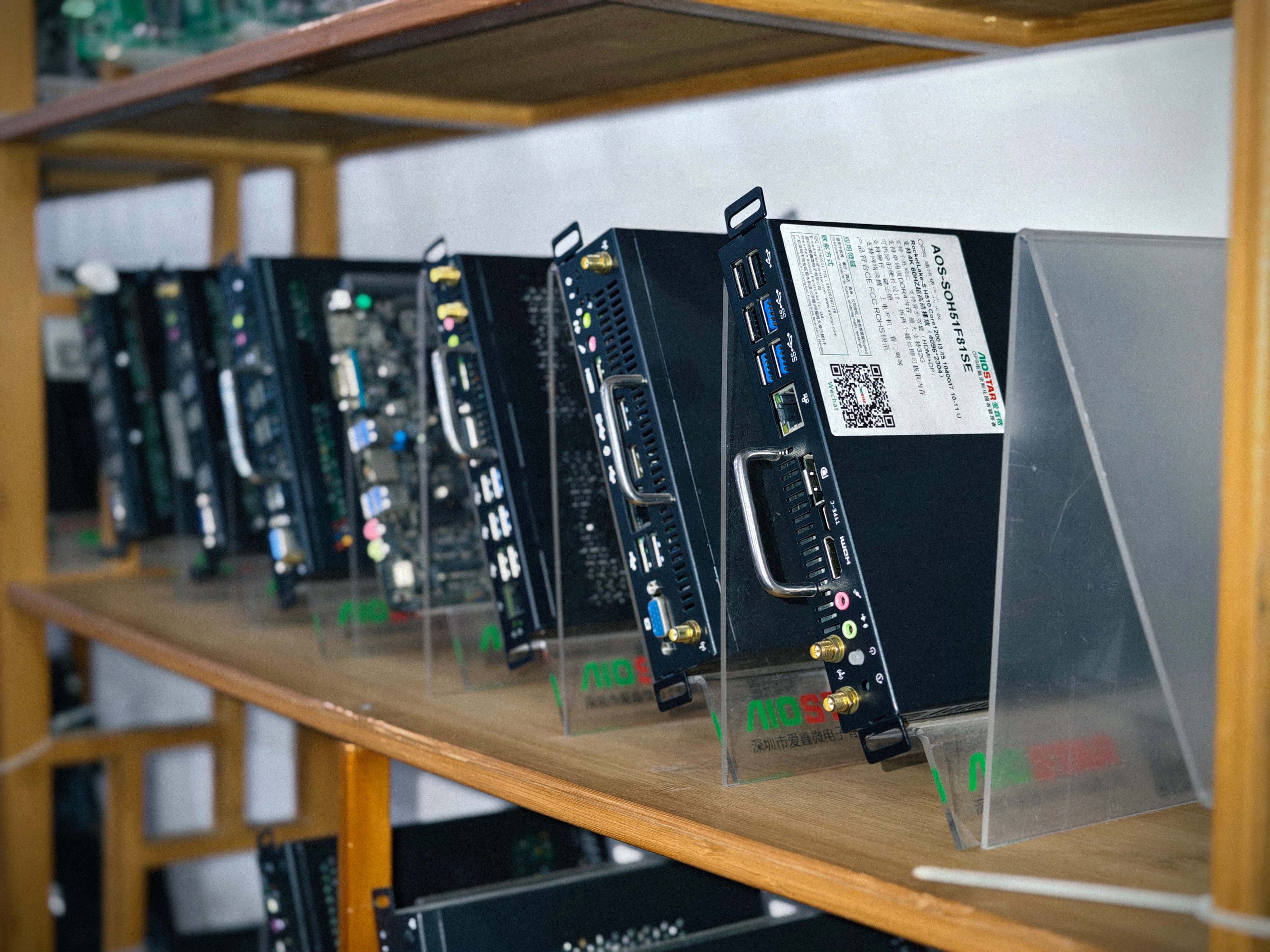
Download the company introduction and product overview: AIOSTAR Introduction 2026_EN.pdf.
Have Questions or Need More Details?
Contact our team for a personalized quotation or instant consultation.
Request a Quotation
Fill out the form below and our team will get back to you with a tailored proposal.
WhatsApp Direct Chat
Prefer to chat in real-time? Message us on WhatsApp for instant assistance & quick answers.
- Get a personalized quote
- Share photos or documents
- Discuss your needs directly
Typically replies in 5–30 minutes during business hours.