
OPS-C Compliance Guide: Component Change, Interface Conformance and Platform Requirements
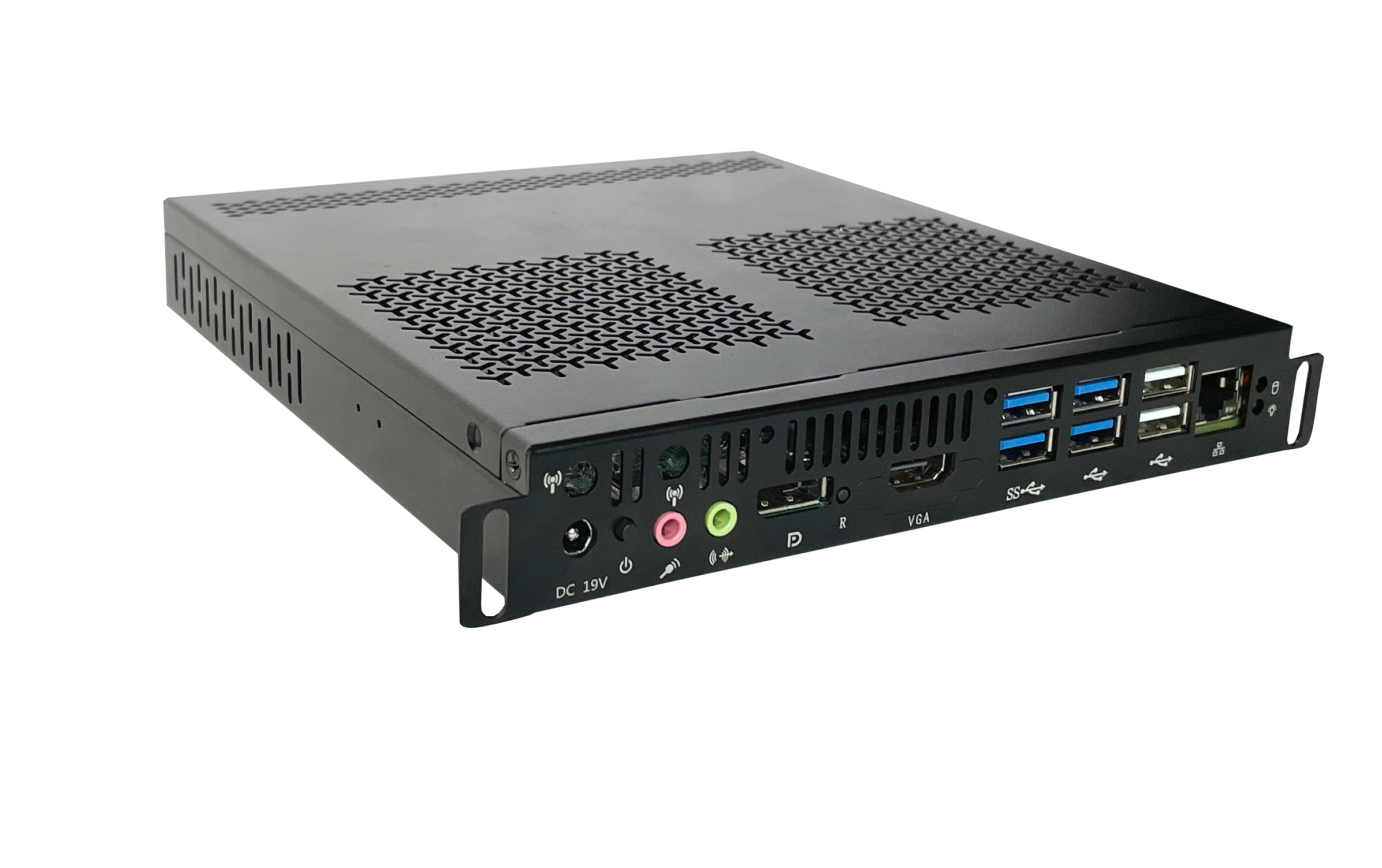
Where Compliance Risk Actually Appears in Display Projects
Most OPS PC compliance failures in display projects are not caused by a missing certificate. They are caused by drift: between the tested configuration and the shipped configuration, between the module and the slot, or between the module and the software stack.
Configuration drift after qualification
Memory, storage, connectors and passive components are the parts most likely to be re-sourced during a multi-year display programme. A substitution can keep a module booting while moving it outside the configuration that was tested. Because a certificate describes a configuration rather than a product name, that drift is what turns a valid certificate into an inaccurate one.
Mechanical and electrical interface mismatch
Intel's Open Pluggable Specification standardizes a mechanical and electrical interface between displays and media players using a unified 80-pin JAE connector with a footprint of 180 mm x 119 mm x 30 mm. The OPS-C variant widely adopted in the Chinese domestic market is not dimensionally identical, typically 180.8 mm x 195.2 mm x 42.5 mm, which is more than enough to prevent an otherwise correct module from seating in the wrong slot. Beyond the footprint, conformance depends on pin definitions, video interface, USB routing and the power budget the display makes available.
Software, BIOS and firmware mismatch
A module that is mechanically and electrically correct can still fail in the field. Typical symptoms include an interactive flat panel that does not auto power-on, Wake-on-LAN that never wakes, a touch controller that is not recognized, or a video output detected at the wrong resolution. These are not manufacturing defects. They are mismatches between the display, the BIOS configuration, the driver set and the operating system image.
Industry Context: Why Conformance Discipline Matters Now
The installed base is large and modular. The global Interactive Flat Panel market, the primary application for OPS PC modules, was valued at approximately USD 12.6 billion in 2024, according to Grand View Research. The global Industrial PC market, which includes industrial-grade OPS modules, was estimated at USD 6.48 billion in 2024 and is projected to grow at a CAGR of 6.30% through 2032, also according to Grand View Research. Estimates differ between research houses; Precedence Research placed the 2024 industrial PC market at USD 5.36 billion, largely because of differing treatment of embedded versus standalone systems. The direction of travel is the same in either case.
Adoption is broad enough that conformance problems scale quickly. Integrated OPS-slot compute modules and Android-based SoC modules are estimated to ship in 15% to 25% of new Interactive Flat-Panel Display units, based on Mordor Intelligence IFPD market reporting. When a single interface decision affects one in six displays, the cost of getting it wrong is measured in service calls rather than in unit price.
AIOSTAR (Shenzhen Aiostar Electronics Co., Ltd.) is a computer hardware supplier established in 2015 in Shenzhen, China. The company develops, produces and supplies OPS PCs, OPS-C pluggable computer modules, Android OPS PCs, industrial motherboards, mini PCs, BOX PCs, industrial panel PCs, servers and customized embedded computing systems, used in interactive displays, digital signage, education, corporate meetings, industrial automation, smart transportation, retail and security projects. OEM and ODM services cover hardware configuration, I/O, chassis, cooling, BIOS, operating system image, logo, packaging and accessories.
How Compliance Readiness Is Actually Managed
A supplier keeps a module compliant by controlling change rather than by re-issuing certificates. In practice, that control has six working parts.
1. Controlled bill of materials and proactive change evaluation
The bill of materials is the artifact that defines what was tested. Keeping it controlled means no component enters production without an evaluation of its effect on the module's mechanical fit, electrical behaviour, thermal profile and certification position. The second half of the discipline is notification: the customer is told what is changing and why, rather than discovering it at delivery. A change that is evaluated but not communicated still breaks a project plan, because the display side may have validated against the previous configuration.
2. End-of-life components handled the same way
End-of-life parts are not an exception to change control; they are the most common reason it is needed. The workable approach is to treat an EOL notice as the start of the same evaluation cycle: identify a validated alternative, assess it against the same interface and functional criteria, notify the customer, and only then release it into the bill of materials. Applied consistently across a programme, this removes the situation where a project is qualified once and then quietly re-qualified by events.
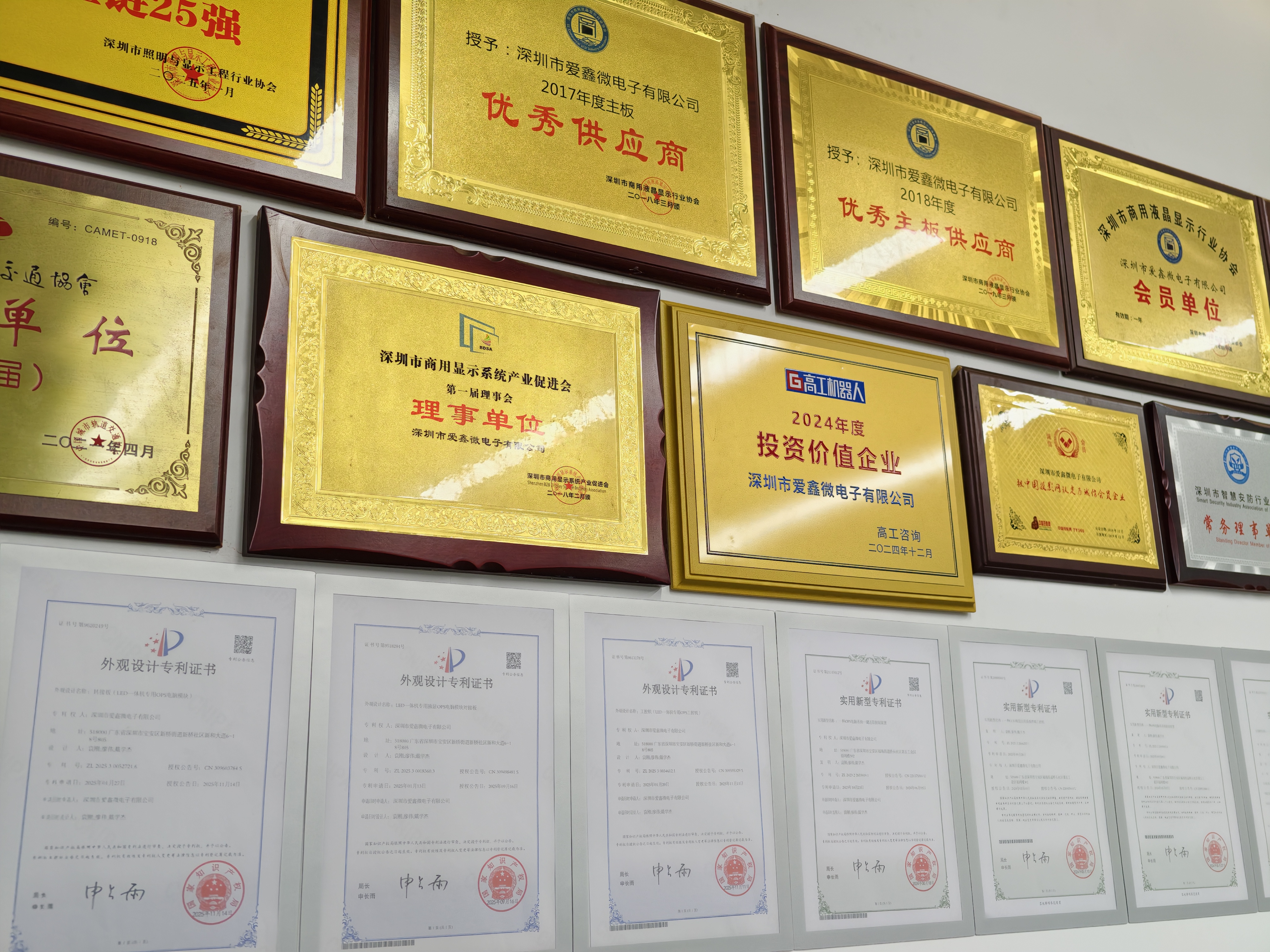
3. Interface conformance checks before a configuration is frozen
Interface conformance decides whether a module will physically and electrically work in one specific display model. It is a checklist, not an impression, and it should be completed against the display's own slot documentation rather than against a generic standard.
| Conformance check | What is verified | Field failure it prevents |
|---|---|---|
| Module dimensions | Footprint against the display slot drawing; OPS uses a 180 mm x 119 mm x 30 mm envelope, OPS-C is typically 180.8 mm x 195.2 mm x 42.5 mm | An OPS-C module ordered for an OPS slot, or the reverse, failing to seat |
| Connector type | Mating connector specified by the display slot, including the 80-pin JAE interface defined for OPS | Incomplete insertion and intermittent contact |
| Pin definitions | Signal assignment per pin, including power and ground positions | Electrical damage or a unit that will not boot |
| Video interface | HDMI or DisplayPort routing and the supported output resolution | No signal, or a resolution cap the project did not plan for |
| USB | Port count, USB version, and internal versus external routing | Touch module or peripheral failure on the display |
| Power budget | Module consumption against the supply the display slot provides | Brownout, random shutdown or unstable boot under load |
| Display firmware | Firmware version behaviour with the module's video output and power sequence | Auto power-on and signal detection failures |
4. Validation on the customer's target display
Conformance on paper is a starting point, not a result. The decisive test is running the candidate module inside the customer's own display model before the final configuration is frozen. For education and interactive whiteboard projects the requirement is explicit: verify mechanical size, connector pinout, display resolution, cooling and operating system image before mass production. A project validated only on a supplier laboratory display is exactly where late-stage surprises originate, because the display firmware, power sequencing and touch controller are the variables that laboratory testing tends to normalize away.
5. OS, BIOS and driver mismatch control
Software conformance is controlled through an approved system image: one image version, one BIOS setting profile and one driver set, frozen for the project and re-validated whenever any of the three changes. The settings that cause the most field escalations are also the ones most easily assumed. On the OPS-C Pluggable Computer Module (AOS-SOHAUF41SC), Wake-on-LAN, auto power-on and watchdog functions are available by BIOS configuration, and Windows or Linux options depend on configuration, which means each behaviour must be specified per project and then tested rather than inherited from a previous deployment.
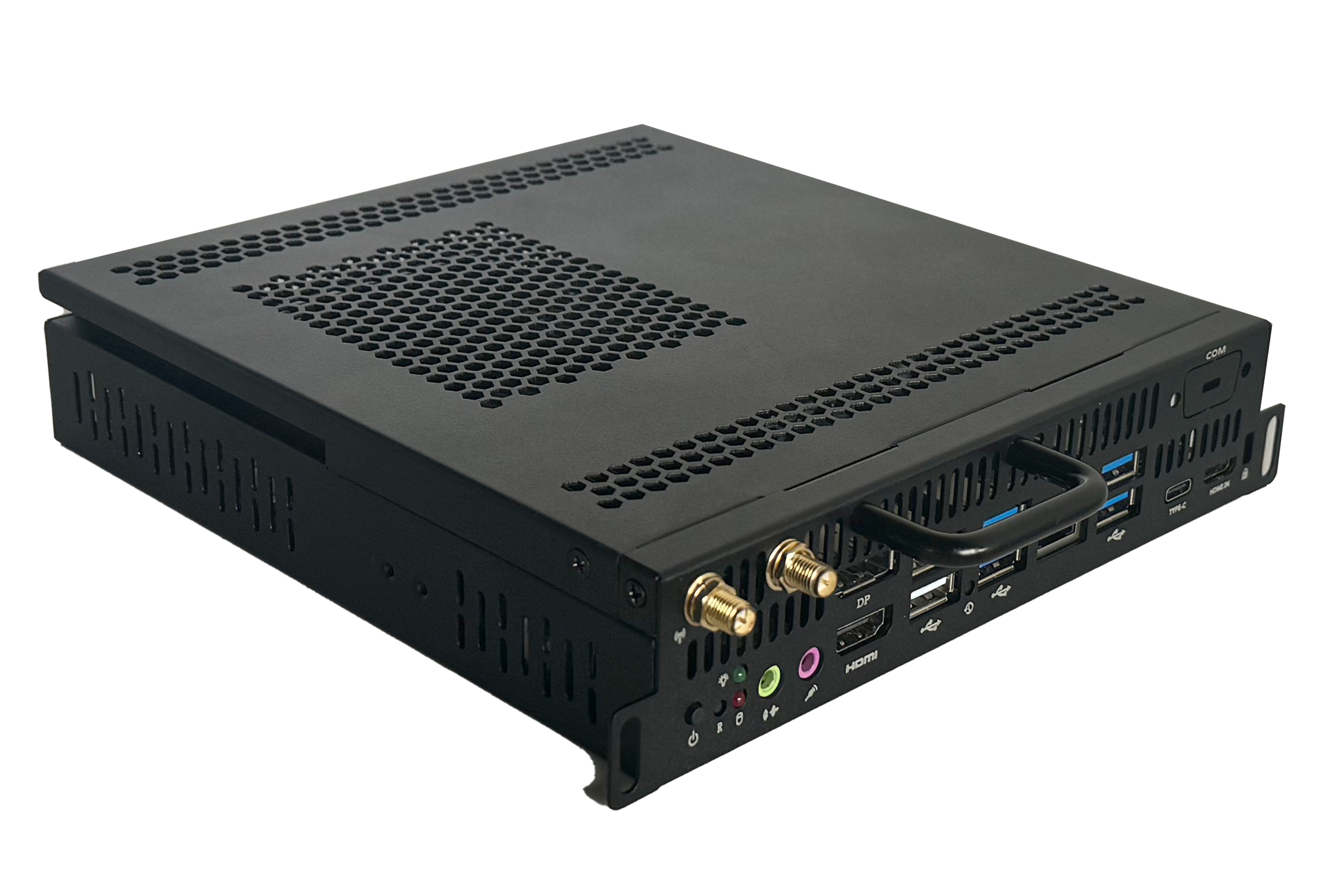
6. Burn-in testing before mass production
Functional and interface testing of finished units is a baseline step. Burn-in testing is applied when specified, and it is the stage that surfaces the failures a short functional test cannot: thermal behaviour under sustained load, intermittent connector contact after repeated mating cycles, and power-supply behaviour at the edge of the slot budget. Where a project requires it, temperature, humidity, vibration and drop testing can be arranged according to project requirements. The purpose of burn-in before mass production is not to improve yield statistics; it is to prevent the first production batch from discovering a design assumption.

7. Domestic-platform project requirements
Projects that specify a domestic platform change the compliance question rather than remove it. The AOS-SOZK6A341SXGE is a Zhaoxin KX-6780 series OPS-C PC supporting Zhaoxin KX-U6780A, KX-U6740A, KX-U6640A and KX-U6640MA processors, with six USB ports including two USB 3.0 ports, optional GT730, GT1030, GTX 1050 or GTX 1050 Ti graphics depending on configuration, and OPS-C slot-in installation. It is designed for domestic-platform interactive displays, education, government information systems and project-specific commercial displays.
What changes is the evidence chain, not the discipline. The same interface conformance checks, the same approved-image rule and the same change control apply, but they run against a different silicon and driver stack, and the alternative components available for future substitution differ from those on an Intel platform. That is why the change-control process matters more on domestic-platform projects, not less: the pool of validated fallback parts is narrower, so an unplanned substitution is harder to absorb. A 1,000-unit OPS adapter board deployment for an industrial and transportation solution provider in Japan, running between three and seven years with stable operation, illustrates what that discipline is worth over a multi-year service life.
Step-by-Step: A Compliance Readiness Workflow
The sequence below is the practical order of operations for a display programme that has to survive certification review, customer acceptance and several years of field service.
- Define the display interface. Obtain the slot drawing, connector specification, pin definitions, video interface, USB map and available power budget from the display supplier or project owner.
- Select the module family and platform. Match OPS or OPS-C to the slot, then match Intel, Android or a domestic platform to the software requirement and the project's procurement conditions.
- Freeze a candidate configuration. Fix CPU, memory, storage, graphics, cooling, BIOS profile and operating system image in a written configuration record that both sides can reference.
- Run interface conformance checks. Verify module dimensions, connector type, pin definitions, video interface, USB routing and power budget against the display documentation before any sample is ordered.
- Validate on the target display. Install the candidate in the customer's display model and test power-on, signal detection, touch, USB peripherals, network wake and representative applications.
- Confirm the software stack. Lock the approved system image, BIOS settings and driver set, and validate Wake-on-LAN, auto power-on and watchdog behaviour where the project depends on them.
- Record the compliance position. Map the frozen configuration to the applicable certifications and note the limits of their scope, since a certificate covers the tested configuration rather than a product name.
- Control change. Route any component, firmware or image change through evaluation and customer notification before it enters production, and treat end-of-life notices as the start of the same cycle.
- Burn in and release. Apply burn-in testing where specified, arrange temperature, humidity, vibration or drop testing according to project requirements, and release to mass production only after the configuration record is closed.
Use Cases: Where Interface Conformance Decides the Outcome
Interactive whiteboards and education displays
The AOS-SOHAUF41SC OPS-C pluggable computer module uses Intel Core i5-1235U and i5-1240P processor options with configurable SO-DIMM memory and M.2 SSD storage, and installs as a removable OPS-C module inside the display. Education deployments are the classic case where mechanical size, connector pinout, display resolution, cooling and operating system image all have to be verified before mass production, because the same display model may be sourced in several hardware revisions across a multi-year framework agreement.
Corporate meeting and collaboration displays
Meeting-room projects add conferencing software and peripheral dependencies on top of the interface checks. For this scenario, the AOS-SOZK6A341SXGE OPS-C PC provides the computing platform for conferencing, document sharing, whiteboarding and presentation, and the validation list expands to camera, microphone, touch, display output, operating system and conferencing software compatibility. Auto power-on behaviour is part of the acceptance criteria here, not a convenience feature.
Digital signage and smart retail
The AOS-SOR358464H Android AI OPS Computer is built on a Rockchip RK3588 octa-core processor running up to 2.4 GHz with an integrated 6 TOPS NPU, 4 GB LPDDR4 memory as standard and up to 16 GB optional, eMMC storage, and Android 13, Ubuntu or Debian options. Its 8K multimedia capability depends on firmware and interface configuration, so signage projects should confirm codec support, resolution, content management software, storage, network and thermal requirements before configuration lock rather than after deployment.
Large-format visualization and video walls
The AOS-SOH61I41SXG discrete-GPU OPS computer is based on the Intel H610 platform and supports selected 12th and 13th Gen Intel Core i3, i5 and i7 processors, with HDMI, HDMI and DisplayPort video outputs and up to 8K 60 Hz output subject to the selected CPU, GPU and display configuration; optional discrete graphics are available by project. These projects need the GPU model, power budget, heat dissipation, output resolution and display compatibility confirmed together, because the power budget of the slot is usually the binding constraint.
Comparing AIOSTAR OPS-C and OPS Modules on Conformance-Relevant Attributes
| Model | Platform | Installation | Memory and storage | Operating system | Conformance-relevant notes |
|---|---|---|---|---|---|
| AOS-SOHAUF41SC | Intel Core i5-1235U and i5-1240P options | OPS-C slot-in | Configurable SO-DIMM memory and M.2 SSD | Windows or Linux depending on configuration | Wake-on-LAN, auto power-on and watchdog available by BIOS configuration; covered by CE-RED certificate 25ITC1212094 and RoHS declaration 25ITC1212100 |
| AOS-SOZK6A341SXGE | Zhaoxin KX-U6780A, KX-U6740A, KX-U6640A and KX-U6640MA | OPS-C slot-in | Configurable memory and storage | Configurable operating system | Six USB ports including two USB 3.0; optional GT730, GT1030, GTX 1050 or GTX 1050 Ti graphics by configuration; intended for domestic-platform project requirements |
| AOS-SOH61I41SXG | Intel H610, selected 12th and 13th Gen Intel Core i3, i5 and i7 | Slot-in OPS | Configurable memory and storage | Configurable operating system | HDMI, HDMI and DisplayPort; up to 8K 60 Hz subject to selected CPU, GPU and display configuration; optional discrete graphics by project |
| AOS-SOR358464H | Rockchip RK3588 octa-core up to 2.4 GHz, 6 TOPS NPU | Slot-in OPS module | 4 GB LPDDR4 standard, up to 16 GB optional; eMMC storage | Android 13, Ubuntu or Debian | 8K multimedia capability depends on firmware and interface configuration; confirm codec and content management support per project |
The table is deliberately limited to attributes that affect conformance. It does not rank the modules, because the correct choice is the one that matches the slot, the power budget and the software requirement of a specific display project.
Frequently Asked Questions
Which certifications confirm that an OPS PC module is compliant for EU display projects?
The OPS-C Pluggable Computer Module (AOS-SOHAUF41SC) holds certification number 25ITC1212094 for CE-RED compliance under Radio Equipment Directive 2014/53/EU, and complies with EU RoHS Directive 2011/65/EU and amendment 2015/863/EU, tested to standards including EN IEC 62368-1:2020. The PC computer (Microcomputer) RoHS declaration 25ITC1212100 covers the same product family, tested to the IEC 62321 series and EN IEC 63000:2018. Both were issued by Shenzhen iTC Product Testing Co., Ltd. and apply to the EU market. Because the certificate describes the configuration tested rather than the product name, keeping that configuration stable is what keeps the certification statement accurate.
How do you confirm that an OPS-C module will physically fit a specific display slot?
Interface conformance checks compare module dimensions against the display's slot drawing, verify the connector type and pin definitions, and validate the video interface, USB routing and power budget against what the display supplies. Intel's OPS specification defines an 80-pin JAE connector with a 180 mm x 119 mm x 30 mm footprint, while the OPS-C variant widely used in the Chinese domestic market uses different dimensions, typically 180.8 mm x 195.2 mm x 42.5 mm. The check is completed by testing the candidate module on the customer's target display before the final configuration is frozen, not after.
What happens when a component in an already-qualified OPS-C module reaches end of life?
End-of-life components are handled through the same controlled process as any other change. A validated alternative is identified, assessed against the same interface and functional criteria, communicated to the customer, and only then released into the bill of materials. Memory, storage and connectors are the most frequent candidates. Because a module's certified position depends on its configuration, the substitute is re-checked rather than assumed equivalent, and the change is notified rather than discovered at delivery.
What are the MOQ and lead time for an OPS-C evaluation sample?
MOQ is 1 unit for evaluation samples; customized project MOQ depends on configuration, and standard lead time is 60 days. Evaluation samples exist to validate mechanical fit, connector pinout, display resolution, cooling and the operating system image on the customer's own display before mass production. To start a conformance check on a specific AIOSTAR OPS PC or OPS-C Computer Module, send the display slot documentation and software requirements to salesos@aiostar.com or request a sample through the contact form on aiostar.com.
Conclusion: Certificates State the Configuration, Processes Protect It
Compliance readiness for OPS and OPS-C display projects is not a document that is filed once. It is a process with clear components: a controlled bill of materials, proactive evaluation and customer notification when components change or reach end of life, interface conformance verified against the actual slot, validation on the customer's target display, a frozen operating system and BIOS image, and burn-in before mass production. Certificates state what was tested. The process is what keeps the shipped unit inside that statement.
For buyers in the research and evaluation stage, the practical filter is simple: ask a supplier to show the configuration record, the change notification flow and the target-display validation result before asking for a price. A supplier that can produce all three is a supplier whose certificate will still describe the module that arrives.
Validate Your OPS-C Configuration Before Mass Production
AIOSTAR (Shenzhen Aiostar Electronics Co., Ltd.) supplies OPS PCs, OPS-C pluggable computer modules, Android OPS PCs and customized embedded systems, and operates on an OEM and ODM basis covering CPU platform, memory, storage, I/O, chassis, cooling, BIOS functions, operating system image, logo and packaging. Monthly capacity is 5,000+ units, with a one-year warranty unless otherwise agreed in the quotation or proforma invoice.
Email: salesos@aiostar.com | Tel / WhatsApp: +86 153 3879 5007 | Website: www.aiostar.com
Download the company and product introduction: Aiostar Introduction 2026 (EN, PDF)
Request an OPS-C Evaluation Sample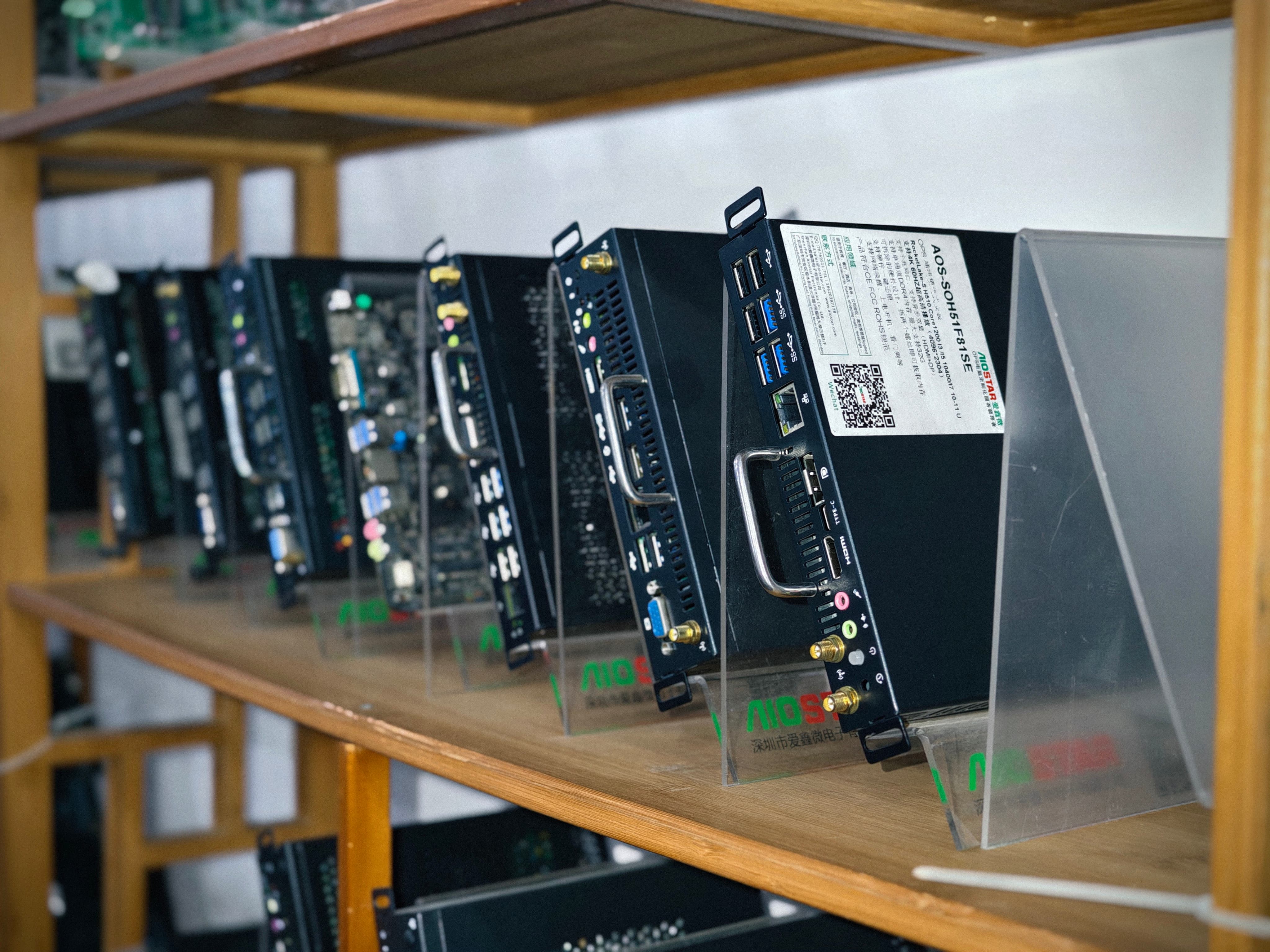
Have Questions or Need More Details?
Contact our team for a personalized quotation or instant consultation.
Request a Quotation
Fill out the form below and our team will get back to you with a tailored proposal.
WhatsApp Direct Chat
Prefer to chat in real-time? Message us on WhatsApp for instant assistance & quick answers.
- Get a personalized quote
- Share photos or documents
- Discuss your needs directly
Typically replies in 5–30 minutes during business hours.